The Pocket Creator Kit of 2026 — and Why Half of It Will Not Ship to America
The Pocket Creator Kit of 2026 — and Why Half of It Will Not Ship to America
Something unusual has happened to the small-camera market this year, and the spec sheets do not show it. On paper, 2026 has been an exceptional twelve months for pocket-sized creator gear: bigger sensors in smaller bodies, internal recording in microphones that weigh less than a coin, and 8K capture from cameras you can close your hand around. In practice, the shopping list you can actually act on now depends on which country you live in — and for American buyers, two of the four most interesting products here are simply not for sale.
This is not a supply shortage or a staggered rollout. It is a regulatory outcome, and it has quietly reshaped what a well-chosen pocket kit looks like depending on your passport. Below we go through four products that define the category right now — what each one does, who it suits, who should skip it, and what it costs — and then we explain the split that runs underneath all of them.
A note on method: GadgetGlow Bytes does not test hardware. Every specification below is taken from manufacturer documentation and cross-checked; every hands-on judgement is attributed to the reviewer who made it.
1. Insta360 X6 — the one that replaced three cameras
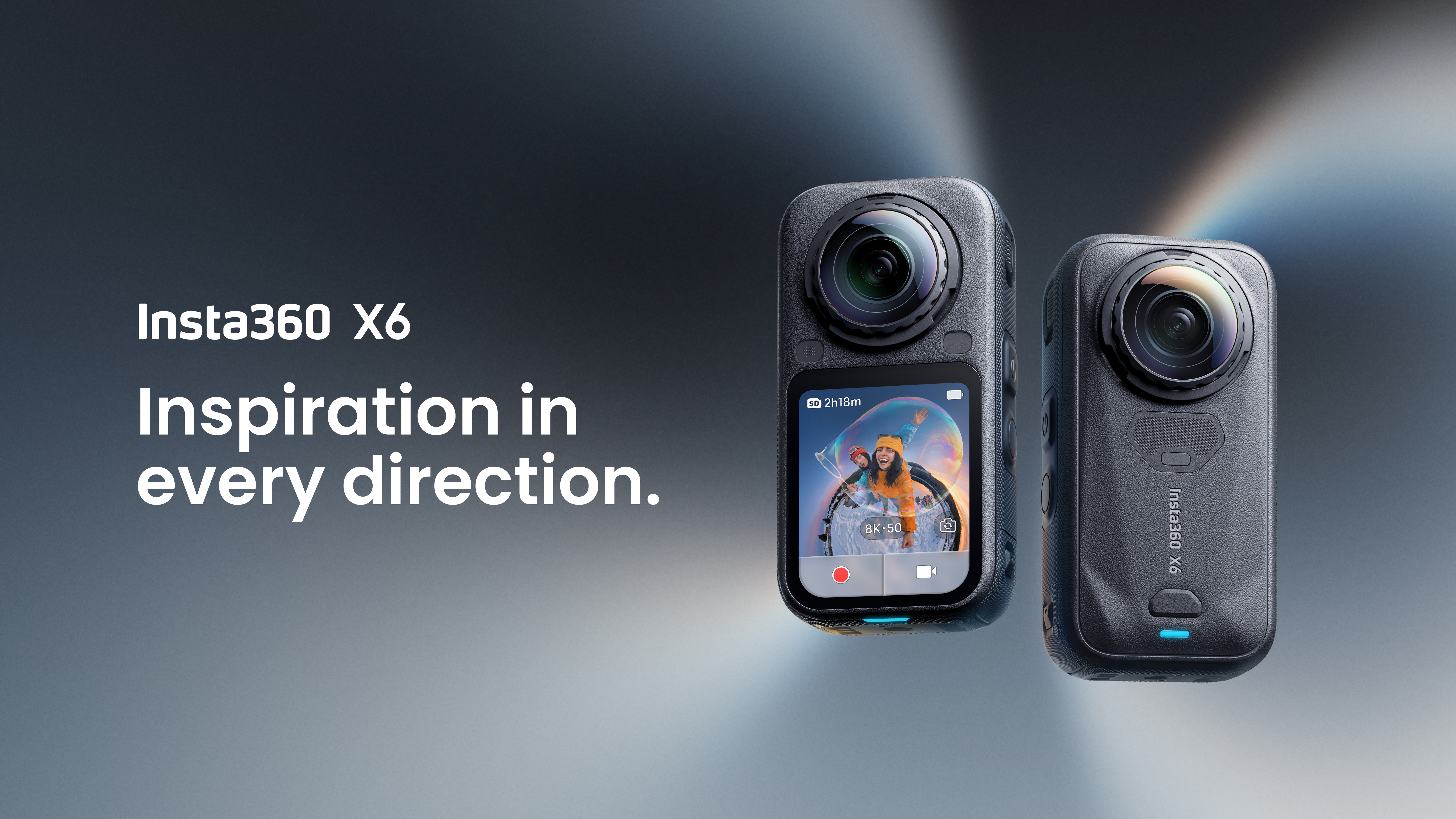
The X6 went on sale on August 12, 2026, from US$699.99, and Insta360's own launch materials make an unusually specific claim: that it collapses three devices into one. It shoots full 360 at 8K50fps, it produces flat 4K with subject tracking straight out of the camera via InstaFrame 2.0, and it switches to a conventional single-lens action camera at 5K60.
The hardware behind that is real. Insta360 specifies custom dual Sony 1/1.1-inch square sensors — described by the company as delivering full 1-inch 360 imaging, with 33% more sensor area than the X5 — paired with a triple-chip arrangement built around an 8-core 3.3GHz 4nm processor. The company also claims a first: native in-camera Dolby Vision on a 360 camera, alongside 10-bit colour and an I-Log profile for grading. The 2600mAh battery is rated at 140 minutes of 8K30fps 360 recording, and the camera carries 47GB of usable internal storage, so it runs with no SD card at all.
Reviewing the camera, Engadget found it strong across the board rather than specialised in one direction — the "little something for everyone" framing in its verdict.
Buy it if you want one device to cover travel, action and vlogging and you would rather reframe later than compose now. Skip it if you shoot mostly talking-head video: you are paying a substantial premium for a 360 workflow you will never use, and a conventional camera will look better for less. Cheaper alternative: Insta360's own X5 remains on sale and covers most of the same ground at lower cost, as does the GoPro MAX2 below.
2. GoPro MAX2 — the cheapest way into 8K 360
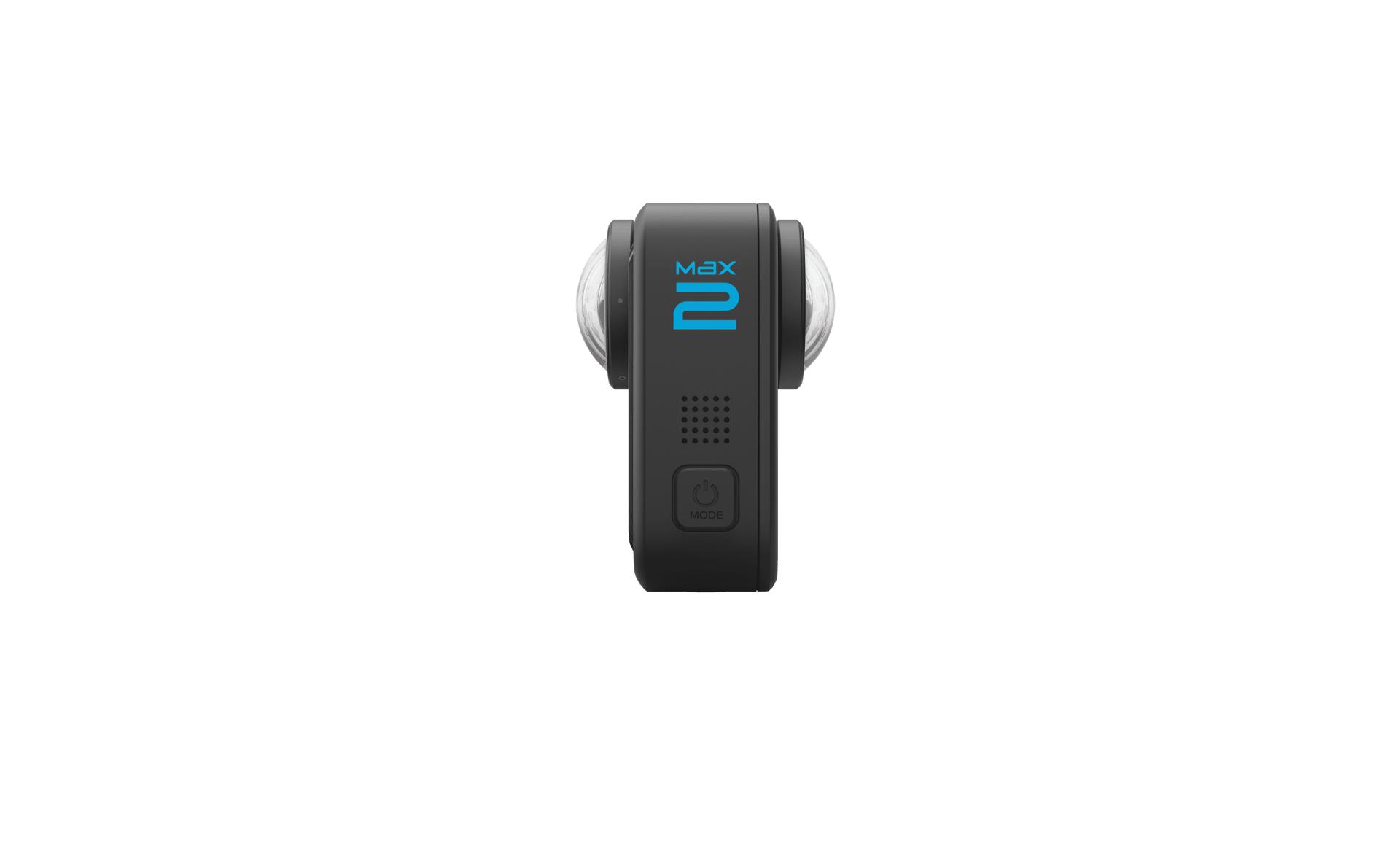
MAX2 is the elder statesman of this group, announced ahead of the 2026 cycle alongside GoPro's LIT HERO and the Fluid Pro AI gimbal. It lists at $499.99 on GoPro's own store, which makes it the least expensive current-generation 8K 360 camera sold in the United States.
GoPro specifies true 8K video with over a billion colours, 29-megapixel 360 stills, six microphones, twist-and-go replaceable glass lenses, and a 1960mAh cold-weather Enduro battery. One genuinely differentiating item sits in the spec list: MAX2 is, by GoPro's account, the only 360 camera with built-in GPS — which matters if you want speed, altitude or route overlays without pairing a watch. It works with 35-plus existing GoPro mounts, which is not a trivial advantage for anyone with a drawer full of them.
It is also the product in this round-up with the clearest published caveats. In its review, Stuff praised the daylight image quality and stitching but reported a tendency toward lens fogging and weak low-light video, scoring it four out of five.
Buy it if you already own GoPro mounts, you shoot outdoors in good light, and you want GPS telemetry baked in. Skip it if you shoot at night or indoors regularly — on the published reviews, this is where it gives up ground to the X6. Cheaper alternative: MAX2 has been discounted to around $419 at some retailers, so it is worth checking before paying list.
3. DJI Osmo Pocket 4 — excellent, and not for sale in the US

DJI announced the Osmo Pocket 4 on April 16, 2026. Its press release specifies a 1-inch CMOS sensor with an f/2.0 aperture, 4K at 240fps for slow motion, 14 stops of dynamic range, a 10-bit D-Log profile, ActiveTrack 7.0 subject tracking that holds at 4x zoom, and 107GB of built-in storage with transfer speeds up to 800MB/s. There is a new 5D joystick, a dedicated zoom button, and a charge time of 0 to 80% in 18 minutes.
It is, on specification, the most capable small gimbal camera DJI has built, and it connects directly to DJI Mic transmitters for four-channel audio without a separate receiver. Retail listings reported by RedShark News put it at £445 / €499, with a Creator Combo at £545 / €619. DJI's own press release publishes no US price at all — which is the tell.
Buy it if you are outside the United States, you shoot handheld vlogs or run-and-gun interviews, and you want mechanical stabilisation rather than digital cropping. Skip it if you are in the US, where it is not officially sold; grey-market imports carry no warranty support and, as a radio device, no FCC authorisation. Alternative: Insta360's Luna series occupies similar ground in markets where the Pocket 4 is unavailable.
4. DJI Mic Mini 2S — 12 grams that record on their own

The Mic Mini 2S arrived on August 4, 2026, roughly three months after the Mic Mini 2, and it brings the one feature that separates a convenience microphone from a dependable one: the transmitter records internally. According to RedShark News, each 12-gram transmitter carries approximately 14.5GB of storage and supports 32-bit float capture, holding up to 28 hours in default 24-bit mode. If the wireless link to the receiver drops mid-interview, the audio survives anyway.
The receiver now handles four transmitters at once, up from two, which turns a two-person kit into a small panel setup. Range is quoted at 400m with the standard receiver. Two-level AI noise cancelling, clipping control and loudness balancing round it out. The same source lists the 2 TX + 1 RX bundle with charging case at £169 / €189, and a 1 TX + 1 RX kit at £79 / €99 — roughly double the Mic Mini 2 for the larger bundle.
Buy it if you interview people in unpredictable places and cannot afford a dropout. Skip it if you record at a desk with a wired microphone, or if the Mic Mini 2 already covers you — internal recording is the entire premium here. Cheaper alternative: the standard Mic Mini 2 at roughly half the price, if you accept the risk of a lost link.
The four side by side
| Model | Type | Headline capture | Internal storage | Price | Sold in US |
|---|---|---|---|---|---|
| Insta360 X6 | 360 / action | 8K50 360; 5K60 single-lens | 47GB usable | US$699.99 | Yes |
| GoPro MAX2 | 360 | True 8K; 29MP 360 stills | microSD | US$499.99 | Yes |
| DJI Osmo Pocket 4 | Gimbal camera | 4K240; 14 stops; 10-bit D-Log | 107GB | £445 / €499 | No |
| DJI Mic Mini 2S | Wireless mic | 32-bit float internal recording | ~14.5GB per TX | £169 / €189 | No |
How the market split in two
The reason two of these products stop at the US border has nothing to do with cameras. Under Section 1709 of the FY2025 National Defense Authorization Act, signed in December 2024, a US national security agency was required to complete a formal security assessment of DJI. If no agency completed that audit by December 23, 2025, DJI would be added automatically to the FCC's Covered List. No agency took it up. On December 22, 2025 — one day before the deadline — the FCC published the notice adding DJI to the list.
Being on the Covered List does not recall existing products. What it does is block new FCC equipment authorisations, and in the United States essentially every modern camera and microphone is a radio device. That is why the Osmo Pocket 4, announced four months later, shipped worldwide but not in America, and why a 12-gram microphone launched in August is still described as pending authorisation.
Almost every review of these products treats availability as a footnote. We think it is the story. For a decade the pocket-camera market behaved like a single global market with one leader, and reviewers could rank devices on merit alone. That assumption has quietly stopped holding. The Osmo Pocket 4 may well be the best small gimbal camera ever built, and for an American reader that is now trivia. Meanwhile Insta360 — which faces no equivalent restriction — has spent 2026 expanding into precisely the categories DJI can no longer defend in the US: gimbal cameras with the Luna line, and wireless microphones with Mic Pro and Mic Air. The X6 launching at $699.99 against a $499.99 GoPro looks less like confident pricing and more like pricing into a market where the most obvious cross-shop is absent. The practical consequence is that "best pocket camera of 2026" is no longer one answer. It is two lists, and any review that gives you a single ranking without saying where you live is giving you an incomplete one.
What we still don't know: whether DJI's pending FCC applications will be granted, whether any agency will eventually conduct the Section 1709 audit, and whether US prices across the category would soften if DJI returned. We also do not know how much of DJI's 2026 hardware was designed before the December 2025 decision landed.
Sources
- Insta360 — Insta360 Unveils X6: The Biggest Leap in 360 Capture Yet (primary)
- GoPro — MAX2 product page and tech specs (primary)
- DJI — DJI Delivers Next-Generation Imaging Capabilities with Osmo Pocket 4 (primary)
- FCC — Public Notice DA-26-223A1, Covered List proceedings (primary)
- RedShark News — DJI Mic Mini 2S: specs, price and availability
- RedShark News — DJI Osmo Pocket 4: specs, price and release date
- Engadget — Insta360 X6 review
- Stuff — GoPro Max 2 review
- Rupprecht Law — Section 1709 of the NDAA 2025 explained
Prices and specifications verified September 16, 2026 and subject to change. GadgetGlow Bytes does not receive products from manufacturers for coverage and does not test hardware; hands-on findings are attributed to the publications that made them.


Comments
Post a Comment