GADGETS — WEDNESDAY, AUGUST 26, 2026
Tensor G6, a Wider Fold and a 1-Inch GoPro: August's Five Biggest Gadgets
The hardware that defined the last seven days — ranked, priced and assessed
August is traditionally the month when the consumer technology industry stops rehearsing and starts shipping. This year the pattern has held with unusual force. In the space of a single week, Google put its most ambitious silicon yet into retail channels, Samsung reshaped the physical proportions of the book-style foldable, and two long-dormant product categories — the action camera and the tabletop wireless speaker — received their most substantial upgrades in half a decade.
What follows is not a list of everything announced. It is a considered ranking of the five devices that generated the most sustained consumer attention, retail movement, and editorial coverage over the past seven days. Each has been evaluated on the same criteria: what it actually does differently, what it costs, and whether the upgrade justifies the outlay.
📱 1. Google Pixel 11 Pro & Pixel 11 Pro XL
Flagship Launch
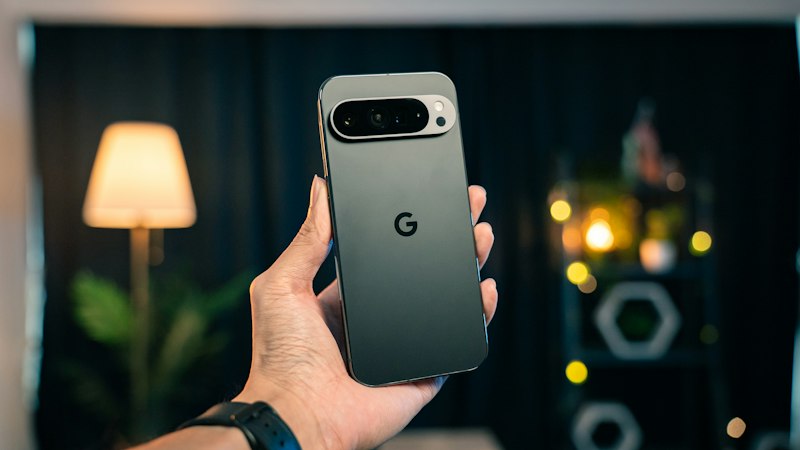
Google's eleventh-generation flagship is the clearest statement of intent the Pixel line has made since its inception. At its centre sits the Tensor G6, fabricated on TSMC's N3P process — a refined 3nm node that finally puts Google's custom silicon on competitive manufacturing footing with the rest of the flagship field. The performance claims are specific rather than vague: 50% more TPU compute for on-device AI workloads, up to 25% faster web browsing, 15% quicker app launches, and roughly 20% better power efficiency than the Tensor G5 it replaces.
That efficiency figure matters more than the raw throughput. Previous Tensor generations delivered credible computational photography and genuinely useful on-device machine learning, but paid for both in thermal throttling and battery drain. The N3P transition is Google's attempt to close that gap without diluting the AI-first architecture that distinguishes the platform. The Titan M3 security coprocessor handles the hardware root of trust independently.
Configuration is straightforward: the entry 256GB variants ship with 12GB of RAM, while the 512GB and 1TB tiers step up to 16GB. Camera hardware has been substantially reworked and now supports 120x Pro Zoom alongside an expanded suite of computational photography tools. Charging moves to the Qi2.2 standard, bringing magnetic alignment and higher wireless throughput.
The pricing is the sticking point. At $1,099 for the Pixel 11 Pro and $1,299 for the Pro XL, Google has applied a $100 increase over the previous generation — a move that places the device squarely in territory it once undercut on principle. Whether the silicon justifies the repositioning is the question buyers will be weighing over the coming weeks.
📐 2. Samsung Galaxy Z Fold 8
Foldables
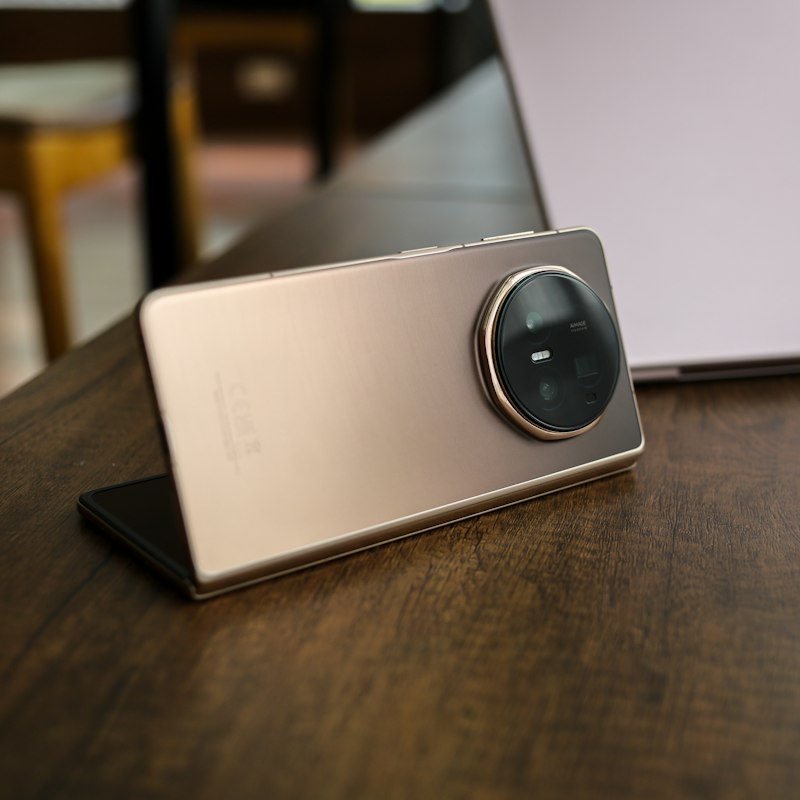
Samsung has spent eight generations refining the book-style foldable without meaningfully questioning its shape. The Galaxy Z Fold 8 breaks that pattern. Announced on 22 July and available at retail since 5 August, it is Samsung's first wide-screen foldable — shorter and wider than the tall, narrow silhouette that has defined the category since 2019.
The consequence is a 7.6-inch inner display with a 4:3 aspect ratio and a 10:16 cover screen. In practice this means the closed device behaves far more like a conventional phone than any previous Fold, addressing the single most persistent criticism of the format: that the outer screen was too cramped for the tasks people actually perform one-handed. Opened, the near-square inner panel is markedly better suited to documents, spreadsheets, and side-by-side multitasking than the letterbox proportions it replaces.
Underneath sits the Snapdragon 8 Elite Gen 5 for Galaxy, a Samsung-specific binning of Qualcomm's flagship part, paired with One UI 9 on Android 17. The camera system leads with a 200MP main sensor alongside a 50MP ultrawide. Battery capacity rises from 4,400mAh to 5,000mAh, and charging finally moves from an uncompetitive 25W to a more reasonable 45W — an overdue correction on a device of this price.
That price is $1,899 for the 256GB configuration, or £1,699 in the United Kingdom. It remains a substantial commitment, though notably it now sits at the accessible end of a tiered foldable lineup rather than at its apex.
"A tiered foldable lineup that could redefine the category's identity." — SamMobile, 2026
🎥 3. GoPro Mission 1 Pro
Editor's Pick

The action camera has been a stagnant category for several years, defined by incremental sensor bumps and increasingly desperate accessory ecosystems. The Mission 1 Pro is the first GoPro in a long while that reviewers have described in genuinely enthusiastic terms — Tom's Guide called it the first GoPro they had been excited about in years.
The reason is the sensor. GoPro has moved to a 1-inch quad-Bayer unit, substantially larger than anything in the competitive field, and paired it with a codec pipeline that records up to 8K60p, 4K240p, and 1080p at 480fps — all in 10-bit log with roughly 14 stops of dynamic range. That specification sheet reads like a cinema camera rather than a helmet mount, and it is the log recording in particular that changes the device's role: footage now grades into professional workflows rather than fighting them.
Field reviews have consistently praised the stabilisation, which reviewers describe as effortless, alongside unexpectedly competent internal audio and best-in-class battery endurance. Low-light performance — historically the action camera's fundamental weakness — is transformed by the larger sensor.
There are trade-offs. The Mission 1 Pro is thicker and heavier than the Hero 13, and at $699 ($599 with a GoPro subscription) it costs $270 more. It also ships without internal storage, relying entirely on microSD, where DJI's Osmo Action 6 includes 50GB of high-speed onboard memory. For casual users the Hero line remains the sensible purchase; for professionals and serious creators, this is the first action camera in years that earns its price.
🔊 4. Marshall Stanmore IV
Audio
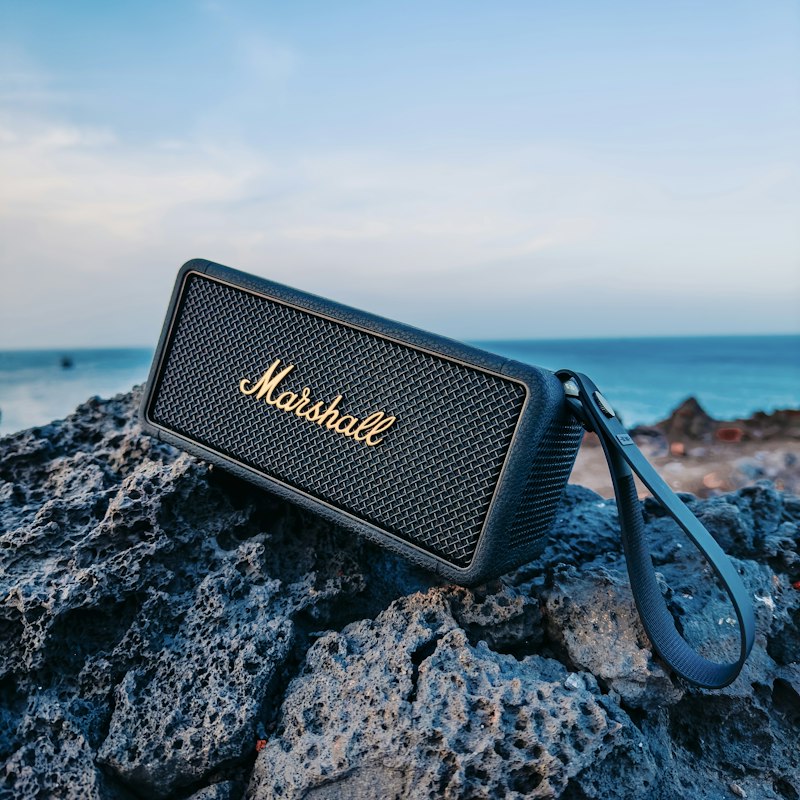
Four years elapsed between the Stanmore III and its successor, and Marshall has used the interval to address the engineering rather than the styling. The amp-cabinet aesthetic — script logo, textured vinyl wrap, brass control knobs — is essentially unchanged. What sits behind the fret cloth is not.
The woofer moves from 50W to 60W, and tweeter output has been nearly doubled. The bass port has been redesigned, and connectivity steps up to Bluetooth 5.3 with LDAC support alongside Auracast for multi-speaker grouping. Physical inputs remain generous by 2026 standards: RCA and 3.5mm AUX are both present, which makes the Stanmore IV unusually accommodating of turntables, older amplifiers, and anything else that predates wireless.
Reviews have been consistent. TechRadar describes energetic, impactful sound with a stunning industrial design; Tom's Guide calls it an exceptional home speaker with powerful bass and refined treble that holds up across the volume range. A Dynamic Loudness feature preserves tonal balance at low listening levels, which is the difference between a speaker that works at 11pm and one that does not.
The significant omissions are Wi-Fi streaming and voice assistant support. At $399 / £349 this is a Bluetooth speaker in a market where competitors at similar prices offer full network audio. For buyers who want a single beautiful object that sounds excellent and requires no ecosystem commitment, that is arguably a feature. For anyone building a multi-room system on Wi-Fi, it is a genuine limitation.
🏠 5. Google Home Speaker with Gemini
Smart Home
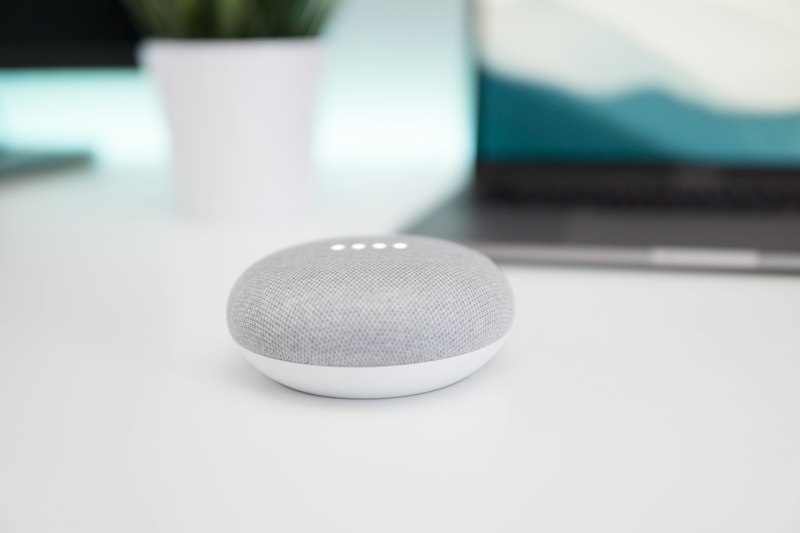
Google had not released a standalone smart speaker since the Nest Audio arrived in September 2020. The Google Home Speaker ends a six-year silence, and it arrives with a coherent argument for why the wait was justified: the assistant inside it is no longer a command parser.
Gemini for Home replaces the rigid trigger-phrase grammar that has governed voice assistants for a decade. Users can issue compound instructions — turning off everything except the kitchen light, for instance — correct themselves mid-sentence, and chain multiple requests into a single utterance without the device losing context. Anyone who has spent years reverse-engineering the exact phrasing a smart speaker will accept will recognise how substantial that change is in daily use.
Hardware-wise the device offers 360-degree sound and ships in four finishes: Porcelain, Hazel, Berry, and Jade. It reached shelves on 25 June at $99.99 / £99.99, holding the same price point Google has maintained across the category since the original Home.
The commercial structure deserves scrutiny. The headline capabilities — Gemini Live, Camera History Search, and Home Briefs — sit behind a Google Home Premium subscription at roughly $10 per month, included free for the first six months via a Standard trial valued at $60 / £48. Buyers should evaluate the $99 hardware and the ongoing $120 per year as a single proposition, because the speaker's most distinctive features are not permanently included in the purchase price.
6 Years
Since Last Speaker
🧭 The Pattern Behind the Week
Taken together, these five launches describe a market in a particular mood. Three of the five — the Pixel, the Fold, and the Home Speaker — are explicitly built around on-device or cloud-assisted artificial intelligence, and in each case the AI capability is the primary justification for the price. The other two, the GoPro and the Marshall, succeed on entirely traditional grounds: better sensors, better drivers, better engineering.
The second pattern is subscription creep. Google's speaker is the clearest example, but the logic increasingly applies across the category: the hardware is priced to move, and the features that distinguish it are metered. Buyers evaluating any AI-forward device this season would be well served by calculating the three-year cost of ownership rather than the sticker price.
The third is that physical form is finally being reconsidered. Samsung's decision to widen the Fold, after eight generations of refining a shape it inherited from its own first prototype, suggests that the foldable category has matured past the point where novelty alone sustains it. That is a healthy sign.


Comments
Post a Comment