Three Rulebooks and a President Who Wants None of Them
Three Rulebooks and a President Who Wants None of Them
Over seventy-two hours between Saturday and Monday, three of the largest organisations in artificial intelligence each published a document about who is allowed to say no to a model. Anthropic's chief executive asked the entire industry to slow down and invited outsiders into his own building. Microsoft published a draft rulebook listing the things its models must never do, and opened it for public comment. Apple skipped the documents entirely and shipped an assistant that reads your mail.
The President of the United States responded to all of it on Monday by saying that he is the guardrail.
| Document | Binding on | Outside verification | Next checkpoint |
|---|---|---|---|
| Anthropic pacing plan | Anthropic only (step 1) | Yes — embedded reviewers with publication rights | Review team named and contracted |
| Microsoft MAI Code of Conduct | Microsoft's own MAI models | No — self-applied via training | Consultation summary, late October |
| Apple Siri AI terms | Users, by region and device | Partial — privacy claims externally verifiable | October language expansion; EU timeline |
| US federal AI policy | No binding framework proposed | Not applicable | Any antitrust waiver signal |
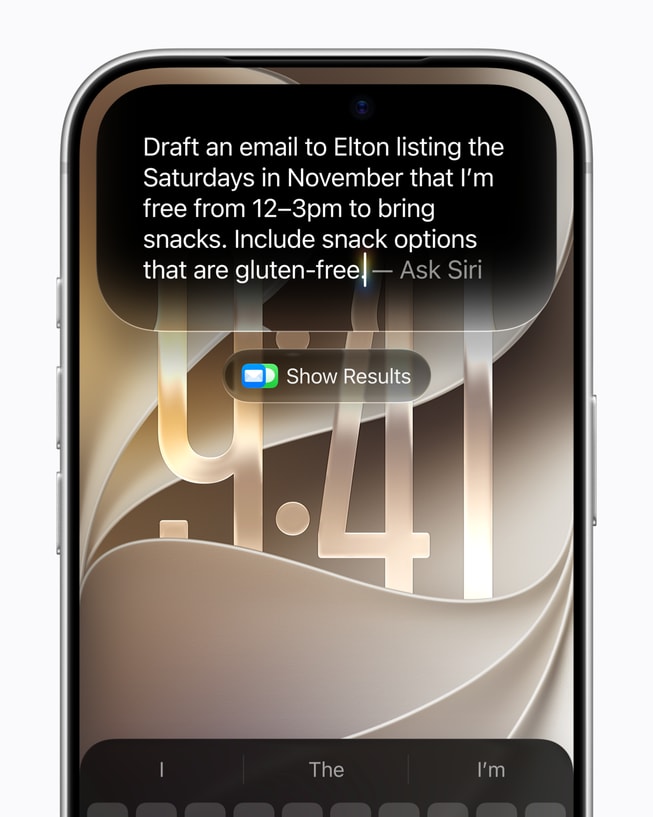
All three documents answer the same question — who gets to stop a model — and they answer it in incompatible ways. Anthropic's answer is a person: an outsider with a badge, a desk and the right to publish what they find. Microsoft's answer is a text: a set of clauses the model is trained to obey, enforced by the company that wrote them. Apple's answer is not a document at all. It is an architecture — a hardware eligibility list, a secure enclave, a regional availability switch and a daily usage meter.
That asymmetry is the story the week's coverage has mostly missed. The safety debate is being conducted in essays and consultation windows, while the actual control surfaces are being built quietly into shipping products. Note what Apple demonstrated on Monday: it can withhold its assistant from an entire regulatory bloc, cap how much of it any user consumes per day, and price the remainder later. That is, functionally, a pacing lever — the very capability Amodei is asking governments to construct for frontier labs from scratch. The company that owns the distribution channel already has one. The laboratories asking for rules do not, which is precisely why they are asking.
What we still don't know: whether any frontier lab besides Anthropic will accept an embedded evaluator; what Microsoft actually changes after consultation, as opposed to what it says it heard; and what Apple's "fee in the future" will cost. All three become checkable within six months, which is unusually short for promises of this kind.
A Critical Threshold, a $12.93 Billion Commons, and Brussels' First AI Search Engine — on what Europe's divergent AI rules already cost.
Run a Private AI Model on Your Own Computer — Properly — the option that needs nobody's consultation period.
Sources
- Dario Amodei — We Must Pace the Frontier (primary)
- Microsoft AI — Humanist AI in practice: A public consultation on our Code of Conduct for MAI Models (primary)
- Microsoft AI — Humanist AI Code of Conduct, full draft text (primary)
- Apple Newsroom — Siri AI, a profoundly more capable and personal assistant, is here (primary)
- Donald Trump — Truth Social post, September 14, 2026 (primary)
- Axios — Trump says a strong, smart president is the only "guardrail" AI needs
- CNBC — Trump rejects AI regulation calls, slams Anthropic CEO Dario Amodei
- ABC News — Anthropic boss calls for AI slowdown, Altman and Musk agree
- CNBC — Apple releases iOS 27, redesigned Siri AI
- GeekWire — Microsoft floats rules for its own AI models as industry debates a slowdown
Quotations and figures verified against the primary documents on September 15, 2026. Amodei's botnet damage estimate is his own projection and is presented as such. GadgetGlow Bytes does not test hardware and does not receive products from manufacturers for coverage; all device capabilities described above are as stated by the manufacturer.


Comments
Post a Comment