TECH NEWS — TUESDAY, AUGUST 25, 2026
Nvidia Buys Its Way Up the Stack, Apple Finally Folds, and Robots Outrun Usain Bolt
The four stories from the last 72 hours that actually reshape the tech economy
The last three days delivered an unusually coherent set of headlines. Strip away the noise and a single theme runs through all of them: the artificial intelligence buildout has stopped being a story about software and become a story about capital, supply chains and physical machines. Nvidia is spending billions to own layers of the stack it once merely supplied. Amazon is raising the price of a Kindle because AI data centres are eating the world's memory chips. And in Beijing, two bipedal robots ran the 100 metres faster than the fastest human who has ever lived.
Here are the four stories from August 22 through 25, 2026 that deserve your attention, and what each one actually signals.
📈 Nvidia's Double Play: $6 Billion for Poolside, Talks to Back Perplexity at $30 Billion
BREAKING
AI ECONOMY
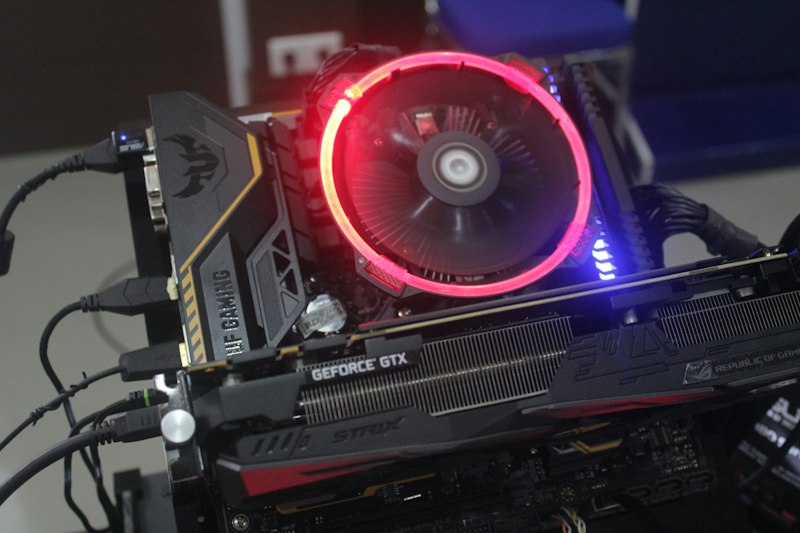
Nvidia spent the weekend doing something more interesting than selling chips. According to The Wall Street Journal, the company has committed roughly $6 billion to a sweeping technology and investment agreement with the AI startup Poolside — a deal that reportedly includes about $1 billion of direct investment, access to Poolside's technology, and the transfer of more than 100 engineers into Nvidia's in-house Nemotron model effort. Poolside's founders are expected to stay with the startup rather than join Nvidia outright.
The structure is as notable as the number. Rather than acquiring the company, Nvidia has assembled a licensing-plus-investment-plus-hiring arrangement that delivers the intellectual property and the technical team without a conventional takeover. It is a template that large technology companies have used with increasing frequency as AI engineering talent has become the scarcest input in the industry.
Separately, The Information reports that Nvidia is in discussions to invest in Perplexity as part of an equity round that could value the AI search company at more than $30 billion — a sharp jump from roughly $20 billion a year ago. Perplexity's annualised revenue has reportedly climbed from under $250 million at the start of 2026 to more than $750 million, driven partly by Perplexity Computer, an agent product aimed at automating professional desktop work. Neither company has confirmed the talks.
100+
Engineers moving to Nemotron
$30B+
Perplexity valuation in talks
$750M
Perplexity annualised revenue
Why it matters: Nvidia is converting chip-generated cash flow into ownership of the layers above the chip. The explicit motivation behind the Poolside deal is competitive: Chinese developers including DeepSeek and Alibaba's Qwen have released capable models with downloadable weights, giving developers control that closed American systems do not offer. Nvidia's answer is to fund a credible U.S. open-weight alternative — one that, conveniently, runs best on Nvidia's own computing stack. The company is no longer just the landlord of the AI economy. It is becoming a tenant in most of its own buildings.
📱 Apple's Foldable iPhone Wins Over Early Testers with a Passport Design
HARDWARE
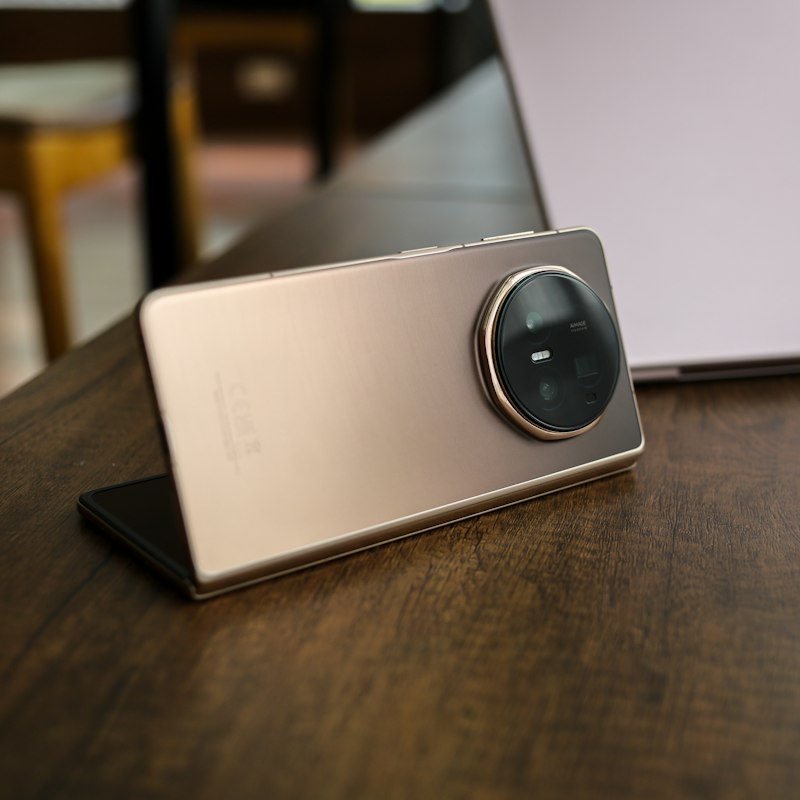
After years of development and an equal number of years of rumours, Apple's foldable iPhone appears to be nearing reality — and the early reactions are unusually warm. Per reporting from PCMag, testers of the device, referred to in reports as the iPhone Ultra, have praised its passport-style form factor, the durability of its hinge, and its pocketability. The specifications under discussion include a nearly crease-free 7.8-inch inner display paired with a 5.5-inch cover screen.
Testers reportedly rated the device strongly as a camera viewfinder and found it capable in gaming, productivity and entertainment workloads, with the internal display layout drawing comparisons to a small iPad. The dual-camera system attracted more mixed notes — a predictable trade-off, since foldable chassis leave little room for the large sensor stacks that define modern flagship photography. Launch timing remains tied to a possible September 2026 alignment with the rest of the iPhone line.
Why it matters: Samsung and a cohort of Chinese manufacturers have had the foldable category largely to themselves for the better part of a decade, and the segment has never quite escaped its reputation as an expensive novelty with a visible crease down the middle. Apple's late arrival has always carried an implicit promise: that the company would wait until the engineering problems — the hinge, the crease, the durability — were genuinely solved rather than merely tolerable. If early testers are right that the crease has effectively been engineered away, the competitive pressure on the incumbents will be immediate and severe.
💰 Amazon Raises Echo, Kindle and Fire TV Prices by up to 60% as Memory Costs Bite
PRICE ALERT
SUPPLY CHAIN
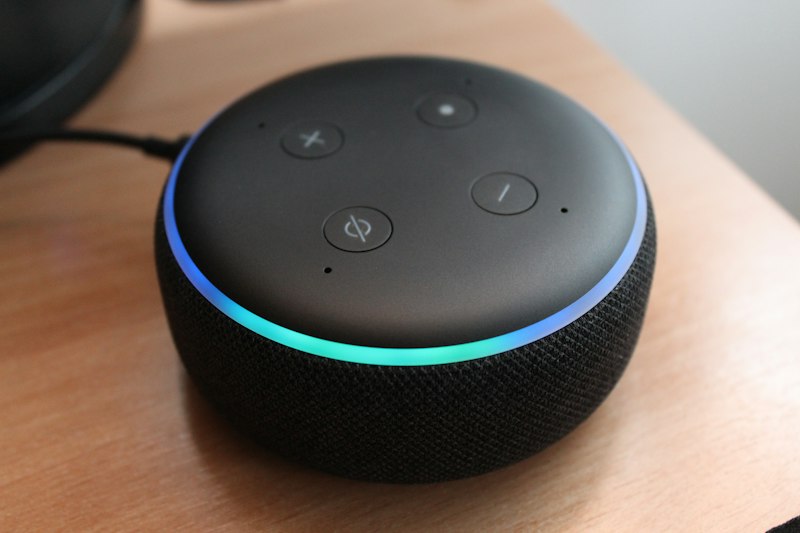
Amazon has raised prices across parts of its Echo, Kindle and Fire TV hardware lineups, with some products increasing by as much as 60 percent, according to The Verge. The driver is not demand but cost: memory and storage components have grown substantially more expensive as AI infrastructure absorbs a growing share of advanced memory production and strains the broader semiconductor supply chain.
The move puts Amazon in an awkward position, because its hardware has never really been about hardware margins. Echo devices exist to place Alexa in living rooms. Fire TV exists to defend Amazon's position in streaming. Kindle anchors an entire digital-book ecosystem. Each device is a subsidised entry point into a services relationship, which means a 60 percent price increase protects the margin on the device while potentially throttling the funnel the device was built to feed.
"The AI infrastructure boom is beginning to influence consumer hardware economics, showing how data-center demand can ripple through global component supply chains." — Tech Startups, August 2026
Why it matters: This is the clearest consumer-facing evidence yet that the AI capital expenditure cycle has costs that land far outside the data centre. When hyperscalers compete for high-bandwidth memory, storage and advanced manufacturing capacity, the scarcity propagates downward — into phones, laptops, televisions and, apparently, e-readers. Anyone budgeting for a device upgrade in the next twelve months should assume that the sticker price reflects a bidding war they are not participating in.
🤖 Humanoid Robots Break Bolt's 100m Record — and XPeng Raises $900 Million
ROBOTICS
PHYSICAL AI
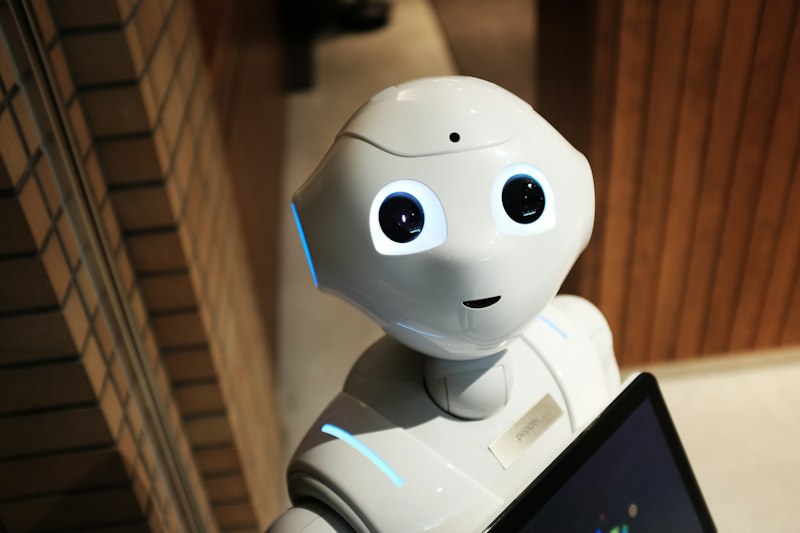
At the opening of the second World Humanoid Robot Games in Beijing, two Chinese bipedal robots ran the 100 metres faster than Usain Bolt's world record. Tiangong Ultra, built by the Beijing Humanoid Robot Innovation Centre, completed a preliminary heat in 9.39 seconds; Honor's Lightning clocked 9.47 seconds. Both beat the 9.58-second mark Bolt set in 2009, and a separate test run by Lightning reportedly hit 9.32 seconds. Nikkei Asia reported the results.
The improvement curve is the real story. The same Tiangong platform managed only 21.50 seconds at last year's event — a better-than-twofold gain in twelve months, achieved through improved leg design, longer strides and refined control algorithms. Organisers were candid about the limitations: the machines still struggle badly with controlled deceleration, and several finished their runs by slamming into crash mats or collapsing outright. Sprinting in a straight line is not the hard part of robotics.
The commercial signal arrived the same weekend. XPeng announced that its robotics business has raised more than $900 million in its first external funding round, valuing the unit at over $6.3 billion. IDG Capital and Gaorong Ventures led the round, with Tencent and Alibaba participating as strategic investors. XPeng says the capital will fund humanoid development, mass production, and further work on its physical AI models, and has committed to moving its IRON humanoid toward production before the end of 2026.
9.39s
Tiangong Ultra, 100m
$900M
XPeng robotics round
Why it matters: A $900 million round for a robotics division signals that physical AI has graduated from demonstration to industrial investment category — at least in China. XPeng's structural advantage is reuse: its Turing AI chips, perception systems, manufacturing capacity and software stack were all built for autonomous vehicles and transfer directly to humanoids. That gives automakers a meaningful edge over standalone robotics startups attempting to solve hardware, AI and manufacturing simultaneously. Tencent and Alibaba's participation suggests China's largest technology companies see embodied AI as the platform that follows the smartphone.
📜 Also Worth Knowing
Hugging Face explores a sale above $13 billion. Business Insider reports the AI developer platform has hired a bank to gauge buyer interest, up from a roughly $4.5 billion valuation in 2023. Hugging Face functions as something closer to GitHub for machine learning than a model developer, which is precisely what makes an acquisition complicated — its value rests on being perceived as neutral ground for models from competing labs.
Alibaba launches Wan3.0. Alibaba Cloud's latest generative video model produces clips up to 30 seconds from inputs including documents, spreadsheets, presentations and PDFs, alongside a roughly $10 billion share placement to fund computing infrastructure. The document-as-prompt approach hints at where enterprise adoption is heading.
Iran-linked hackers blamed for a four-day UK power plant outage. Per The Guardian, a small British facility was taken offline; the wider grid was unaffected. The significance is the category shift — from reconnaissance of critical infrastructure to actual disruption of it.
New Zealand proposes an under-16 social media ban. Prime Minister Christopher Luxon's bill would require platforms to take reasonable steps to verify user ages, following Australia's lead. Messaging, gaming and productivity AI services would fall outside the restrictions.
Sources
- Tech Startups — Top Tech News Today, August 24, 2026: Alibaba, Amazon, Apple, Hugging Face, Nvidia, XPeng & More
- The Wall Street Journal — Nvidia Is Spending $6 Billion to Build a Powerful U.S. Alternative to Chinese AI
- Tech Startups / The Information — Nvidia in Talks to Invest in Perplexity at $30 Billion Valuation as Revenue Tops $750 Million
- Yahoo Finance — Nvidia Reportedly Weighs Perplexity Investment at More Than $30 Billion Valuation
- Benzinga — Perplexity Deal Highlights a Pattern in Nvidia's AI Investments
- Tech Startups — Nvidia to Invest $6 Billion to Build U.S. Open-Weight AI Model Alternative to China's DeepSeek, Kimi K3 and Qwen
- Tech Startups — Top Tech News Today, August 21, 2026: Anthropic, Apple, Broadcom, Google, Nvidia, OpenAI, Tesla & More
Images courtesy of Unsplash. Reporting attributed to The Wall Street Journal, The Information, The Verge, PCMag, Nikkei Asia, Business Insider, The Guardian, Reuters and TechNode as noted above.


Comments
Post a Comment