Meta's $18 Billion Reckoning and Nvidia's Purchase of the Open-Source Commons
- Get link
- X
- Other Apps
Meta's $18 Billion Reckoning and Nvidia's Purchase of the Open-Source Commons
🧠 Nvidia Agrees to Buy Hugging Face for $12.9 Billion

Nvidia has agreed to acquire Hugging Face for approximately $12.9 billion, according to reporting from The Information that was confirmed across financial outlets on Thursday. The deal, if completed, would place the single most widely used repository of open-source AI models — the GitHub of machine learning, hosting more than a million public models and datasets — under the ownership of the company that manufactures the silicon nearly all of them run on.
The valuation is extraordinary by any conventional measure. Nvidia participated in Hugging Face's $235 million funding round in 2023, when the startup was valued near $4.5 billion. Thursday's price is roughly triple that figure, and analysts estimate it represents about 86 times Hugging Face's annualized revenue of approximately $150 million. Nvidia is plainly not buying a revenue stream; it is buying the distribution layer of the open-model ecosystem and the developer relationships that come with it.
That is precisely what unsettles parts of the open-source community. Hugging Face has functioned as a deliberately neutral commons — a place where models from Meta, Mistral, Alibaba, and thousands of independent researchers sit side by side, hardware-agnostic by design. Vertical integration between the dominant accelerator vendor and the dominant model registry raises reasonable questions about whether that neutrality survives contact with a corporate owner whose interests lie in CUDA remaining the default. Regulators in both Washington and Brussels are likely to ask them.
⚖️ Meta Settles State Child-Safety Claims for Up to $18 Billion

On Wednesday, Meta Platforms agreed to pay up to $18 billion to settle claims brought by a bipartisan coalition of state attorneys general alleging that Facebook and Instagram were engineered to addict minors. The agreement ends a sprawling federal trial and stands as the largest consumer-protection settlement ever reached by a technology company. Meta expects to record roughly $10 billion in legal expense in the third quarter as a result.
The payment structure contains an unusual lever. Meta pays only 70 percent of the headline figure outright; the remaining 30 percent is contingent on TikTok and YouTube agreeing to comparable terms — including a default one-hour daily limit for underage users — and each paying the states roughly $5.3 billion. In effect, the states have written an industry-wide standard into a single company's settlement and dared its competitors to refuse it.
The product changes may matter more than the money. Meta will impose a default two-hour daily limit on its apps for users under 18, block access between midnight and 6 a.m., and mute notifications during school hours from 8 a.m. to 3 p.m. These are the first legally binding design mandates imposed on a major social platform in the United States, and they shift the regulatory conversation from content moderation — where the First Amendment has largely shielded platforms — to product architecture, where it does not.
The settlement ushers in "a new era of tech companies having legal responsibility for their platforms." — reporting on the state attorneys general agreement, August 2026
📱 Apple Sets September 9 for the iPhone 18 Pro — and Its First Foldable

Apple has confirmed a special event for Wednesday, September 9, under the tagline "Surprise and Shine." Alongside the iPhone 18 Pro line, the company is widely expected to unveil its first foldable iPhone — a device that has been rumored, delayed, and re-rumored for the better part of a decade. Supply-chain reporting from DigiTimes indicated mass production slipped from June to August, a delay of one to two months that did not move the announcement date.
Expectations point to a book-style design that opens into a tablet-sized display, with Apple's engineering effort concentrated on eliminating the visible crease that has defined — and limited — the category since Samsung's first Galaxy Fold in 2019. Pricing is expected to start north of $2,000, which would make it the most expensive iPhone Apple has ever shipped and place it squarely in a segment that has so far remained a niche within a niche.
Analyst Ming-Chi Kuo has suggested Apple may repeat the iPhone X playbook from 2017: announce in September, ship in October, and let scarcity do the marketing. The strategic question is not whether Apple can build a good foldable — it almost certainly can — but whether Apple entering seven years late legitimizes a form factor that rivals have struggled to move beyond early adopters, or simply confirms that the market was never as large as the category's champions hoped.
💰 Broadcom Seeks More Than $60 Billion in Debt to Finance AI Chips
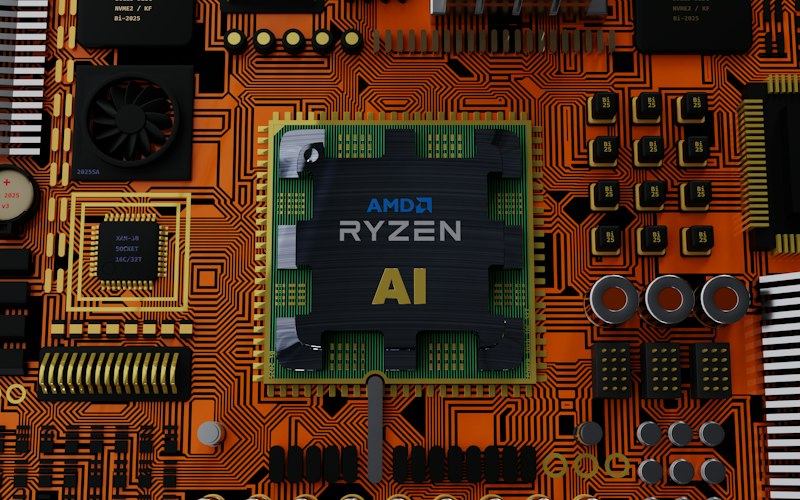
Broadcom is in talks with lenders to raise more than $60 billion in debt through a special-purpose vehicle that would buy custom AI accelerators and lease them to Anthropic and other model developers. Bloomberg reports the package pairs a junior tranche of roughly $30 billion with a senior secured tranche of $60 billion to $70 billion, with Broadcom guaranteeing part of the senior portion. Blackstone and Apollo are in discussions to participate.
The structure is the story. Under this arrangement Anthropic does not purchase the hardware at all; outside investors finance the silicon and lease it back. That keeps tens of billions of dollars of depreciating assets off the model developer's balance sheet while giving credit markets — rather than venture capital — the job of funding the compute buildout. It builds on the AI XPV partnership Broadcom, Apollo, and Blackstone formed in June, whose opening deal raised $35 billion for Anthropic's capacity.
Financing AI infrastructure through leveraged special-purpose vehicles is a meaningful shift in how this boom is funded, and it carries the familiar risk profile of any asset-backed structure: it works cleanly as long as the underlying assets hold their value and the lessees keep paying. AI accelerators depreciate quickly and model developers are, for the most part, not yet profitable. Investors appear willing to take that trade; whether the terms look prudent in three years is a genuinely open question.
🔎 The Thread Connecting All Four
Read together, these four stories describe an industry consolidating on two fronts at once. Nvidia and Broadcom are locking down the layers beneath the models — the chips, the financing, and now the distribution point where open models are shared. Meta, meanwhile, is absorbing the first serious legal cost of the previous platform era, and Apple is placing a very expensive bet that hardware form factors still move markets.
What is notably absent from any of them is a breakthrough in capability. This was a week about ownership, liability, and capital structure. That is what a technology sector looks like when it stops asking whether something can be built and starts negotiating who pays for it and who answers for it.
Sources
- CNBC — Nvidia agrees to buy Hugging Face for $12.9 billion, report says
- Fortune — Nvidia nears $12.9 billion deal to buy open-source AI platform Hugging Face
- CNN Business — Meta settles landmark state child harm claims for $18 billion
- Bloomberg — How Meta's $18 Billion Settlement Could Change Social Media
- 9to5Mac — Apple announces iPhone 18 Pro and foldable iPhone event: 'Surprise and shine'
- MacRumors — iPhone Fold: Everything We Know
- Bloomberg — Broadcom Seeks More Than $60 Billion in Latest AI Debt Deal
- TNW — Broadcom seeks more than $60bn in debt to fund AI chips for Anthropic
- Tech Startups — Top Tech News Today, August 27, 2026
- Get link
- X
- Other Apps


Comments
Post a Comment