Apple Changes Hands, OpenAI Buys an Army of Macs, and the AI Boom Hits the Power Grid
- Get link
- X
- Other Apps
Apple Changes Hands, OpenAI Buys an Army of Macs, and the AI Boom Hits the Power Grid
The past three days delivered a rare convergence: a generational leadership change at the world's most valuable consumer technology company, an unexpected hardware pivot by the industry's most-watched AI lab, a rocket company moving into heavy industry, and Europe formally reclassifying a chatbot as critical digital infrastructure. Taken together, they describe an industry whose constraints have shifted from software to steel, silicon and statute.
🍎 Tim Cook Steps Down: John Ternus Inherits Apple in the AI Era
Monday marked the end of Tim Cook's fifteen-year run as chief executive of Apple. As of today, September 1, longtime hardware engineering chief John Ternus formally takes the role, inheriting one of the most valuable companies on earth at precisely the moment artificial intelligence is redrawing the map of personal computing. Cook remains involved as executive chairman, but operational control now sits with an engineer rather than an operations specialist — the first such handover since 2011.
Cook's tenure was defined by financial and logistical mastery: supply chains, services revenue, and a retail and ecosystem machine that turned Apple into the most profitable hardware business in history. Ternus inherits something different. Investors have spent the past two years questioning whether Apple can move quickly enough in generative AI, given that the company has leaned heavily on external partners while rebuilding Siri and shipping Apple Intelligence, in contrast to the enormous in-house model and data-center commitments made by Microsoft, Google, Meta and Amazon.
Ternus's background may prove to be exactly the right fit, however. He has overseen the iPhone, Mac, iPad and Apple Watch through their most successful generations, and the AI industry is now visibly shifting toward new device categories — smart glasses, foldables, home robotics and AI-first personal computers — where hardware integration matters as much as model quality. His first public test arrives within weeks, at Apple's September event, where the company is widely expected to introduce new devices including its first foldable iPhone.
🖥️ OpenAI Bought Tens of Thousands of Macs to Train Computer-Use Agents
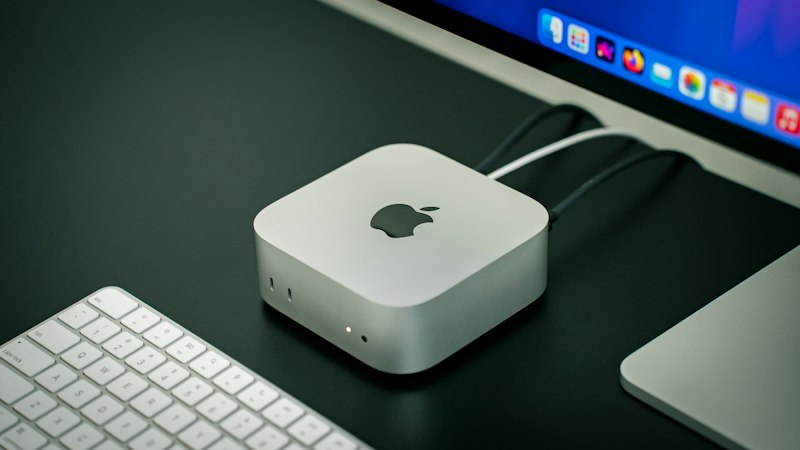
The weekend's most consequential story was also its least expected. Reporting that circulated widely on Sunday and Monday indicates OpenAI has purchased tens of thousands of Mac mini and Mac Studio machines to run reinforcement-learning workloads and train computer-use agents. Anthropic is reportedly pursuing similar work by renting Mac mini capacity through Amazon Web Services.
This is not a replacement for Nvidia GPU clusters, and it should not be read as one. Frontier model pre-training remains a massively parallel problem that belongs on GPUs. Agent training is a different shape of workload entirely: an agent editing code, navigating a file manager, sorting email or completing a multi-step desktop task is doing trial-and-error work that is memory-bound rather than compute-bound. Apple's unified-memory architecture happens to be unusually well suited to it, and a rack of Mac minis is cheap by frontier-lab standards.
The commercial consequences are already visible. The buying wave helps explain why Apple accelerated refreshed Mac mini and Mac Studio models built around the M6 and M5 Ultra, and why Mac revenue jumped 29% in Apple's fiscal third quarter — the company's fastest-growing hardware category. Developers additionally prize Thunderbolt 5 links that let several Mac Studios behave like a small cluster. Ordinary buyers are feeling the squeeze: high-memory configurations are reportedly seeing longer lead times as labs keep asking Apple for more units.
The strategic subtext is the real story: Nvidia now treats Apple as its principal rival in on-device and local AI, a framing almost nobody would have predicted while the Mac was still understood as a consumer franchise.
⚡ SpaceX Is Building a Turbine-Blade Foundry to Break AI's Power Bottleneck

Elon Musk confirmed over the weekend that SpaceX is building a blades-and-vanes foundry near its Starlink plant in Bastrop, Texas, following reporting that documented job listings and roughly 830 acres of land purchases between March and June. The move takes a rocket company directly into one of the most difficult corners of heavy industry.
The technical reason this matters is worth understanding. Hot-section turbine blades operate at 3,000 to 3,600 degrees Fahrenheit — above the melting point of the alloys they are made from, which is only survivable through single-crystal casting, internal cooling channels and ceramic thermal-barrier coatings. Only a handful of foundries worldwide can produce them at industrial scale, and order books at suppliers such as GE Vernova reportedly extend into 2030. Every AI data center that needs on-site gas generation is standing in the same queue.
Musk said in-house casting could bring natural-gas turbines online up to 18 months faster, framing gas as a bridge while SpaceX and Tesla each pursue 100 gigawatts a year of solar manufacturing. The same castings could feed Starship Raptor turbopumps, spreading fixed costs across rockets and terrestrial AI campuses. The plan is not without friction: it collides with local pollution disputes, including at xAI's Memphis site, where temporary turbines are not scheduled for full removal until 2027.
If the foundry works, a Musk-controlled manufacturer would own a scarce input that every other AI builder still has to wait in line for. Power equipment, not chips, is increasingly what sets the pace of AI expansion — and vertical integration is becoming a competitive weapon.
🇪🇺 Brussels Reclassifies ChatGPT as a Very Large Online Platform
The European Commission has designated ChatGPT, Reddit and Roblox as very large online platforms under the Digital Services Act, having determined that each exceeds the law's threshold of 45 million monthly users in the European Union. The designation carries meaningful obligations: systemic-risk assessments, illegal-content procedures, transparency reporting and specific protections for minors. Non-compliance can attract penalties of up to 6% of global annual revenue.
The significance for generative AI is conceptual as much as legal. Regulators are no longer treating ChatGPT as a model behind a chat interface. They are treating it as a large-scale distribution system for information, recommendations and user-generated material reaching tens of millions of Europeans — which is to say, as a platform. Rules originally written for social networks and marketplaces are being extended to AI assistants without much modification.
OpenAI is absorbing this alongside obligations under the EU AI Act, while European competition authorities separately examine relationships between model developers, cloud providers and distribution platforms. That layered structure is on course to make Europe the most demanding jurisdiction in the world for global AI companies. Elsewhere in the regulatory column this week, the Financial Stability Board delivered a pointed warning to G20 finance ministers about AI-enabled attacks.
"the most immediate AI-related threat to the global financial system" — Andrew Bailey, Financial Stability Board Chair, 2026
📌 Also Making Headlines
NASA's Roman Space Telescope is on its way. The $4.3 billion flagship lifted off Sunday morning aboard a Falcon Heavy from Kennedy Space Center, beginning a roughly 100-day cruise to the Sun–Earth L2 point. It carries a Hubble-class primary mirror with a far wider field of view and a 300-megapixel infrared instrument, and is expected to map billions of galaxies and uncover on the order of 100,000 exoplanets during its five-year prime mission.
Europe ordered a €387.8 million supercomputer. EuroHPC selected Bull to build LUMI-AI alongside the existing LUMI system in Finland, using AMD processors, IBM storage and Nokia networking. It is due to become operational in the second half of 2027, and brings EuroHPC's network to 19 AI factory centers built around 12 supercomputers.
Chrome's Manifest V2 era formally ended. As of August 31, Google removed the remaining Manifest V2 extensions from the Chrome Web Store, ending developers' ability to distribute updates for extensions built on the legacy framework. Content-blocker developers have argued throughout the migration that Manifest V3 restricts capabilities and concentrates control with Google — a dispute that has long since outgrown the label of a routine API change.
Sources
- Tech Startups — Top Tech News Today, August 31, 2026
- Fortune — Apple's new CEO John Ternus takes over from Tim Cook
- The Information — How Apple Stumbled Into an AI Hardware Success With the Mac
- CNBC — What's expected at Apple's September event
- Yahoo Finance — Tech stocks today: Apple stock slips as Tim Cook prepares to step down
- Get link
- X
- Other Apps


Comments
Post a Comment