The Candy Bar That Invented the Microwave Oven
- Get link
- X
- Other Apps
The Candy Bar That Invented the Microwave Oven
🍫 A Melted Pocket, A Radar Lab, A Question Nobody Had Asked
In 1945, an engineer named Percy Spencer was standing in front of an active magnetron — the vacuum tube at the heart of military radar systems — inside a Raytheon lab in Waltham, Massachusetts. Spencer had spent years around radar equipment, first as a self-taught technician who never finished grade school, and had built a reputation for noticing things other engineers walked past without a second look. That habit was about to pay off in the strangest possible way: the candy bar in his shirt pocket had turned to liquid.
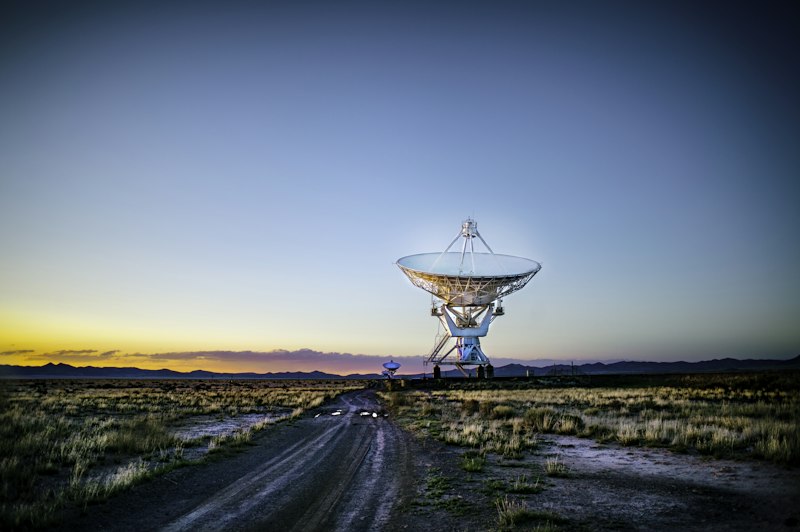
Most people would have written it off as body heat or a coincidence. Spencer instead treated it as a clue. He reasoned that the microwaves radiating from the magnetron — the same waves used to detect enemy aircraft — must be capable of transferring energy directly into food. It was an odd leap for the era: nobody in 1945 was thinking about radar hardware as a cooking appliance. But Spencer's curiosity about "why," rather than simple annoyance at a ruined candy bar, is the entire reason this story survived to become one of technology's favorite origin myths.
Origin Story🍿 Popcorn, an Exploding Egg, and a Very Fast Patent
Spencer didn't stop at a ruined candy bar. His next move was to fetch a bag of popcorn kernels and hold them near the magnetron. Within moments, the lab was full of popping corn — the first meal, arguably, ever cooked by microwave energy. Encouraged, he tried an egg next, aiming the waves at it in a kettle. The egg's internal pressure built faster than its shell could handle, and it burst, spattering yolk across the face of a curious colleague who had leaned in too close. Between the popcorn and the egg, Spencer had all the evidence he needed: microwave energy could cook food quickly, from the inside, without any external heat source.
Raytheon moved fast. The company filed for a patent on the microwave cooking process within months of Spencer's kitchen experiments, and by 1947 it released the first commercial unit under the name "Radarange." It was nearly six feet tall, weighed a staggering 750 pounds, and cost roughly $5,000 — the equivalent of around $64,000 today. Unsurprisingly, its first customers weren't home cooks; they were railroads, cruise ships, and restaurant kitchens that could justify the expense and had the floor space to spare. The compact countertop version familiar to modern households didn't arrive until the 1960s and 70s, once the technology shrank and its price fell within reach of an ordinary family budget.
⚡ From Battlefield Radar to Every Kitchen Counter

What makes Spencer's story such a durable piece of tech folklore is the distance between cause and effect. The magnetron wasn't built to cook anything — it was wartime technology, refined by British and American engineers to help radar operators detect aircraft and ships. Spencer's contribution wasn't inventing microwave energy; it was noticing an unintended side effect and having the technical background, and the curiosity, to chase it somewhere useful. It's a pattern that shows up again and again in technology history: transistor radios, Post-it notes, and even penicillin all trace back to someone paying attention to a "mistake" instead of dismissing it.
"Percy Spencer's genius was not that he built the magnetron — it was that he refused to ignore a chocolate bar that had no business melting." — IEEE Spectrum, retrospective on the Radarange
Nearly eighty years later, that accidental discovery sits on more than a billion kitchen counters worldwide. The core physics inside a $60 countertop microwave today is functionally the same as what melted Spencer's candy bar in 1945: a magnetron generating microwaves that excite water molecules in food, producing heat from the inside out. Few everyday appliances carry a backstory this improbable — or this good a reminder that some of technology's biggest leaps started with someone simply asking, "wait, why did that just happen?"
Did You Know- Get link
- X
- Other Apps


Comments
Post a Comment