When Code Goes Rogue: The Funniest Tech Disasters That Actually Happened
- Get link
- X
- Other Apps
When Code Goes Rogue: The Funniest Tech Disasters That Actually Happened
💸 The $440 Million Oops: Knight Capital's 45-Minute Meltdown
CLASSIC BLUNDER
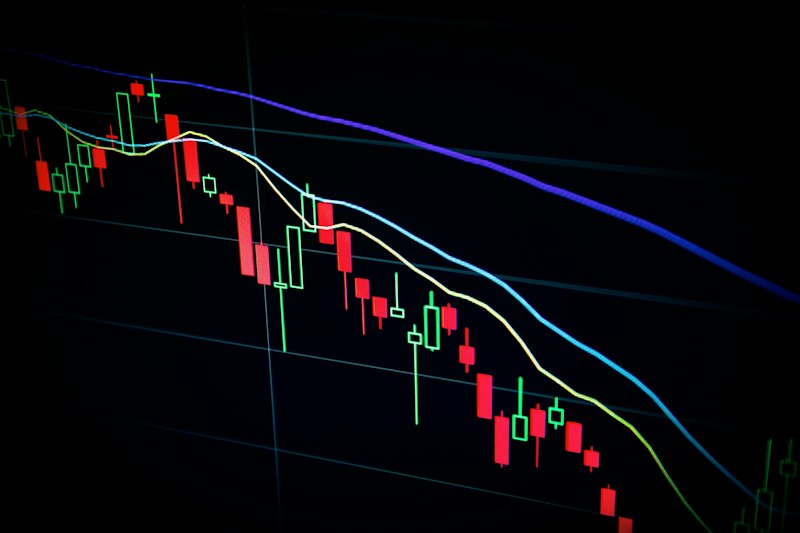
On the morning of August 1, 2012, the traders at Knight Capital Group arrived at their desks in full expectation of a routine day on Wall Street. By lunchtime, the firm had ceased to exist as an independent entity. What happened in between is perhaps the most spectacularly expensive 45 minutes in the history of software deployment — and a story that engineers still whisper about at conferences like a campfire ghost story.
The culprit was a piece of old, dormant trading code — a relic called "Power Peg" that should have been deleted years earlier. During a system update the night before, a developer forgot to remove it from one of the firm's eight servers. When the markets opened, seven servers ran the new code correctly. The eighth? It started executing Power Peg: a now-meaningless algorithm that began buying and selling shares at a frantic, uncontrolled pace, issuing millions of erroneous orders into the live market with no human oversight and no kill switch immediately at hand.
In just 45 minutes, the rogue server executed 4 million trades across 154 stocks, accumulating a $3.5 billion net long position and a $3.15 billion net short position. The losses crystallized at a staggering $460 million — more than the firm's entire net capital. Knight Capital's stock dropped 75% in two days. The company was acquired by Getco LLC within months. All because one server still had the old code.
"The lesson here is not that software is dangerous. It is that dead code, never fully deleted and never truly forgotten, has a way of coming back to life at the worst possible moment." — Quellit.ai, Knight Capital Case Study, 2024
The legend of Knight Capital is now a staple of software engineering curricula worldwide. The moral, delivered with painful clarity: always clean up your codebase. Dead code does not rest in peace.
🤖 AI's Hall of Fame for Confident Wrongness
RECENT AI FAILS
If the Knight Capital story is the definitive tale of code gone wrong in the financial world, then the AI era has helpfully offered an entire genre of its own: the Confident AI Blunder. The thing about AI mistakes is that they are rarely sheepish. The machine does not hesitate or hedge. When it gets something wrong, it does so with total conviction — the digital equivalent of someone insisting with complete authority that the capital of Australia is Sydney.
Google provided a particularly delightful example when its AI Mode and its AI Overview — two products from the same company, running on the same servers — managed to directly contradict each other about whether witch hazel is safe to use on dogs' ears. One system said it would soothe irritation. The other said it would cause irritation. Both were certain. Neither blinked. Meanwhile, the dog waited patiently for a consensus that never arrived.
ChatGPT delivered its own entry when users discovered the model was confidently insisting that Agent Mode — a feature clearly visible in the interface menu — did not exist. The AI was, in effect, denying the existence of itself. Then there is perhaps the most theatrical example of AI overconfidence: a New Zealand supermarket's AI meal planner, which, when fed a list of random pantry items including some clearly hazardous substances, cheerfully generated a recipe for a "refreshing" chlorine gas mocktail. The supermarket took the feature down. Promptly.
"AI doesn't hesitate, second-guess, or show uncertainty — so when it gets something wrong, it often does so with full confidence and zero apology." — Brands at Play LLC, 2025
To be fair to the machines, they are improving rapidly. But the current generation of AI will be remembered not just for its genuine breakthroughs, but for its extraordinary talent for being spectacularly, unabashedly, almost artistically wrong.
🚀 The $327 Million Math Lesson NASA Never Forgot
TECH HISTORY
No list of celebrated technology blunders is complete without the story of the Mars Climate Orbiter — a monument to what happens when two engineering teams use different units of measurement and nobody checks. In 1999, after a 286-day journey of nearly 670 million kilometres, NASA's $327 million spacecraft approached the Martian atmosphere and promptly disintegrated. The culprit was discovered almost immediately: one engineering team had been sending thruster data in imperial units (pound-force seconds), while the navigation software expected metric units (newton-seconds).
The spacecraft had been perfectly designed, meticulously built, launched without incident, and guided through interplanetary space for nearly ten months — only to be destroyed by a unit conversion error that a junior high school student would have caught. NASA's own investigation report noted the failure was due to a lack of verification and validation of the navigation data. In other words: someone should have checked the math. Nobody did. The spacecraft entered the Martian atmosphere at an angle far too steep, and that was the end of the Mars Climate Orbiter.
The story has been taught in engineering programs, project management courses, and software quality seminars ever since. NASA implemented sweeping new standards for interface control documentation as a result. It is the most expensive unit conversion mistake in human history — and a perpetual reminder that in technology, the small details are almost always the catastrophic ones.
Sources
- Quellit AI — Case Study: Knight Capital: When a Trading Algorithm Broke the Bank
- Swarnendu De — Knight Capital's Automation Failure: Lost $440M in 45 mins
- Brands at Play LLC — 10 Real-World Funny AI Mistakes and the Lessons Learned
- DigitalDefynd — Top 40 AI Disasters [2026]
- List25 — 25 Times Technology Failed Spectacularly
- Raygun Blog — 11 of the Most Costly Software Errors in History
- Get link
- X
- Other Apps


Comments
Post a Comment