Micron Shatters Records, AI Wars Intensify, and Apple Raises Prices
- Get link
- X
- Other Apps
Micron Shatters Records, AI Wars Intensify, and Apple Raises Prices
Micron Posts the Biggest Quarter in Its History
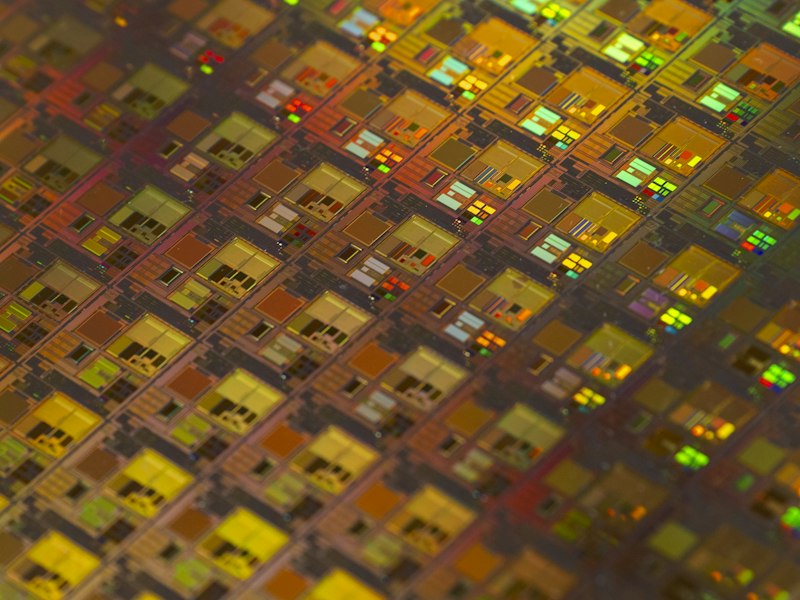
Micron Technology delivered what can only be described as a generational earnings report on June 25, posting Q3 fiscal 2026 revenue of $41.46 billion — a fourfold increase year over year — alongside adjusted earnings per share of $25.11 and record gross margins approaching 85%. Every metric came in well ahead of Wall Street's already elevated expectations, and guidance for Q4 ($49–51 billion in revenue) landed roughly 15% above the analyst consensus. The market responded immediately: Micron shares surged 15% after hours, dragging the broader semiconductor sector higher with it. SK Hynix climbed 12%, and chip equipment makers logged meaningful gains across the board.
The engine behind these numbers is high-bandwidth memory — the specialized, vertically-stacked DRAM that sits directly on Nvidia, AMD, and Google AI accelerators and delivers terabytes-per-second of data throughput. Micron's entire 2026 HBM supply is already sold out under fixed-price multi-year contracts. The company disclosed 16 such strategic agreements with data center operators and automakers, representing an estimated $100 billion in combined lifetime value. In an industry historically defined by punishing commodity cycles, Micron appears to have structurally changed its position by locking in demand from the hyperscalers racing to build AI infrastructure at unprecedented scale.
The results underscore a broader truth that has been taking shape all year: AI is not merely a software phenomenon. Every large model trained and every inference query served requires enormous volumes of memory — and there are currently only three companies on earth capable of manufacturing HBM at commercial scale. Micron's record quarter is, in part, a direct consequence of that scarcity. The company is now guiding for Q4 revenue between $49 and $51 billion, suggesting the AI memory supercycle still has room to run.
ChatGPT Falls Below 50% Market Share for the First Time

Sensor Tower's 2026 State of AI Report, released this week, contains a milestone that would have seemed impossible just eighteen months ago: ChatGPT's share of the global AI assistant market has fallen to 46.4%, marking the first time OpenAI's flagship product has held less than half the market. Google Gemini has risen to 27.7%, fueled by its deep integration across Android, Search, and Workspace. Anthropic's Claude reached 10.3% — and while that figure trails its rivals in raw share, it leads the field on a metric that matters significantly for business health: 13% of Claude users pay for a subscription, the highest paid conversion rate of any major AI assistant.
The competitive pressure is intensifying on the product side as well. Google is preparing to release Gemini 3.5 Pro, which is expected to feature a 2-million-token context window — the largest of any production frontier model — alongside a Deep Think reasoning mode and broad multimodal support. Meanwhile, Noam Shazeer, co-author of the landmark 2017 "Attention Is All You Need" paper that introduced the Transformer architecture, announced his departure from Google DeepMind to join OpenAI. Google had paid approximately $2.7 billion in 2024 to bring him back from Character.AI. The talent competition at the frontier of AI research remains as fierce as the product competition in the market.
"The AI assistant market is now genuinely competitive. Dominance, once assumed to be structural, has turned out to be provisional." — Sensor Tower, State of AI Report 2026
Apple Raises Mac and iPad Prices by Up to 25%

Apple has implemented sweeping price increases of between 15% and 25% across a range of Mac and iPad configurations globally. The company cited surging costs for memory and storage hardware — the very components that are sold out at record prices as a consequence of AI infrastructure demand — as the primary driver. The move rattled investors: Apple's stock fell approximately 5–6% during early trading on Thursday, erasing tens of billions in market capitalization in a single session.
The increases reflect a supply chain reality that is now cascading through the consumer technology market. When hyperscalers are committing $100 billion in contracts to lock in HBM capacity, commodity DRAM and NAND flash become scarcer and more expensive for everyone else — including the world's most valuable consumer hardware company. For buyers, the practical implication is straightforward: anyone eyeing a new MacBook or iPad Pro should expect to pay materially more than they did six months ago. Microsoft similarly raised Xbox console prices this week for the same underlying reason. The AI-driven memory supercycle, it turns out, is not just a story for semiconductor investors — it is repricing the entire consumer electronics category.
🌠China Unveils $295 Billion Five-Year AI Infrastructure Plan
China announced a state-directed AI infrastructure investment plan totaling $295 billion over the next five years, representing approximately $59 billion per year in government-coordinated AI spending. The plan encompasses data centers, domestic chip development, AI model research, and the construction of national AI computing clusters designed to reduce the country's dependence on foreign semiconductor supply chains. The announcement arrives as the global AI investment race has accelerated dramatically: Morgan Stanley projects that global AI-linked debt financing will nearly double to $570 billion in 2026 alone, as hyperscalers and frontier AI labs borrow at scale to fund GPU clusters and power infrastructure.
The scale of China's commitment signals that state-level competition in AI is moving from rhetoric to concrete capital deployment. For Western technology companies and governments, the announcement raises immediate questions about the pace of domestic investment and the robustness of export control regimes that have attempted to limit China's access to the most advanced AI chips. The coming years are likely to reveal whether state-directed capital at this scale can substitute for the open research ecosystems and competitive market dynamics that have driven AI progress in the United States and Europe.
Sources
- TechTimes — Micron Q3 2026 Earnings: $100B in Contracts Signals AI Memory Cycle Break
- The Investing Engineer — Micron Technology Q3 2026 Earnings: 7 Shocking Results
- Build Fast With AI — AI News Today June 23, 2026: 15 Biggest Stories
- Radical Data Science — AI News Briefs Bulletin Board for June 2026
- Tech Company News — Latest Tech News, June 25, 2026
- Tech Startups — Top Tech News Today, June 24, 2026
- Get link
- X
- Other Apps


Comments
Post a Comment