The Battery That Runs on Salt — and Can Make the Ocean Drinkable
- Get link
- X
- Other Apps
The Battery That Runs on Salt — and Can Make the Ocean Drinkable
🧂 The Salt Revolution in Your Future Car
For decades, the global energy storage industry has been locked in a single-minded pursuit of lithium — a scarce metal extracted from remote brine lakes and hard-rock mines, primarily in South America and Australia. Entire geopolitical strategies have been built around controlling it. But in 2026, a quieter revolution is underway, and its secret ingredient is something you already have in your kitchen cupboard: table salt.
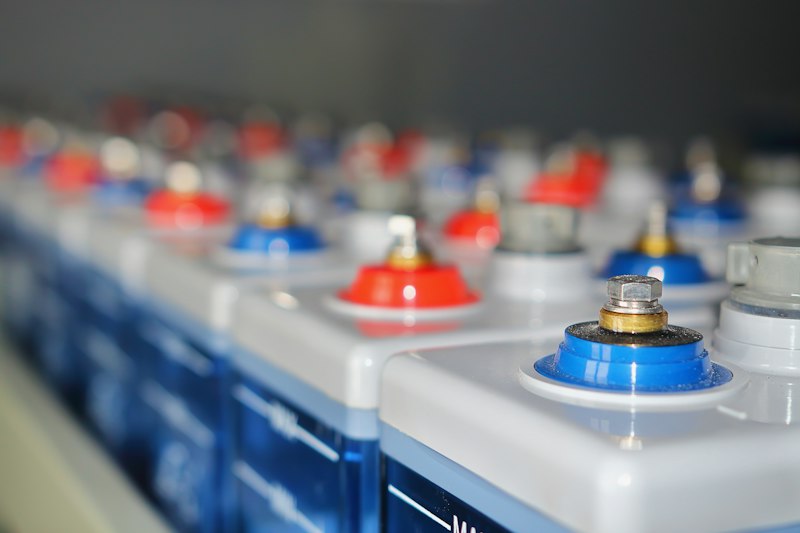
Sodium-ion (Na-ion) batteries have existed on paper since the 1970s, but engineers long dismissed them as inferior: sodium ions are larger and heavier than lithium ions, making it harder to pack them tightly into electrode materials. The batteries cycled poorly, degraded quickly, and simply could not compete on energy density. Researchers kept chasing lithium, and sodium gathered dust.
Then came a counterintuitive breakthrough that turned conventional battery design wisdom on its head. Scientists at the University of Surrey discovered that retaining trace amounts of water inside a key cathode material — a compound called nanostructured sodium vanadate hydrate (NVOH) — rather than painstakingly removing it (as decades of laboratory protocol demanded) dramatically improved performance. The “wet” version stored nearly twice as much charge, charged faster, and remained stable across hundreds of discharge cycles. The finding was published in early 2026 and sent shockwaves through the battery research community.
“Keeping water inside a key battery material — instead of removing it — dramatically boosts performance. The wet version stores nearly twice as much charge and charges significantly faster.” — University of Surrey Research Team, 2026
The implications rippled far beyond the laboratory. If sodium-ion batteries could match or approach lithium’s energy density while using materials derived from one of Earth’s most abundant resources, the entire cost and supply chain calculus of the clean energy transition would shift — permanently.
🌊 The Even Stranger Twist: It Can Also Desalinate the Ocean
Here is where the story takes a genuinely astonishing turn. When Surrey’s research team tested the NVOH cathode material in saltwater — an extreme and inhospitable environment for most battery chemistries — they found something unexpected. Not only did the battery continue operating effectively in seawater, it actively removed sodium ions from the saltwater solution as part of its normal electrochemical cycle. A paired graphite electrode simultaneously extracted chloride ions. The net result: the battery was generating electricity and desalinating water at the same time.
The concept of a battery that simultaneously stores renewable energy and purifies drinking water has long been a theoretical aspiration in academic circles. Over two billion people worldwide lack reliable access to safe drinking water, and desalination — while technically mature — remains energy-intensive. Conventional reverse-osmosis plants consume enormous amounts of grid electricity. A battery architecture that handles both functions in a single device could, at scale, represent one of the most consequential dual-use technologies ever developed.
Researchers note that the work is still at an early laboratory stage and that engineering such a system for coastal or off-grid deployment will require years of refinement. But the underlying chemistry is proven. As one of the paper’s co-authors noted, the finding “challenges some very deeply held assumptions about what battery materials are supposed to look like inside.”
🚗 From the Lab to the Road: CATL Bets Big on Sodium
While researchers probe the boundaries of what sodium-ion chemistry can do, the world’s largest battery manufacturer has already moved from curiosity to commerce. CATL — the Chinese giant behind roughly a third of all EV batteries on the planet — launched its sodium-ion product line under the brand name Naxtra in 2025 and has now begun rolling it out in passenger vehicles. The Changan Nevo A06 is widely cited as the world’s first mass-produced EV to run on sodium-ion cells, and it targets a range exceeding 370 miles on a single charge.
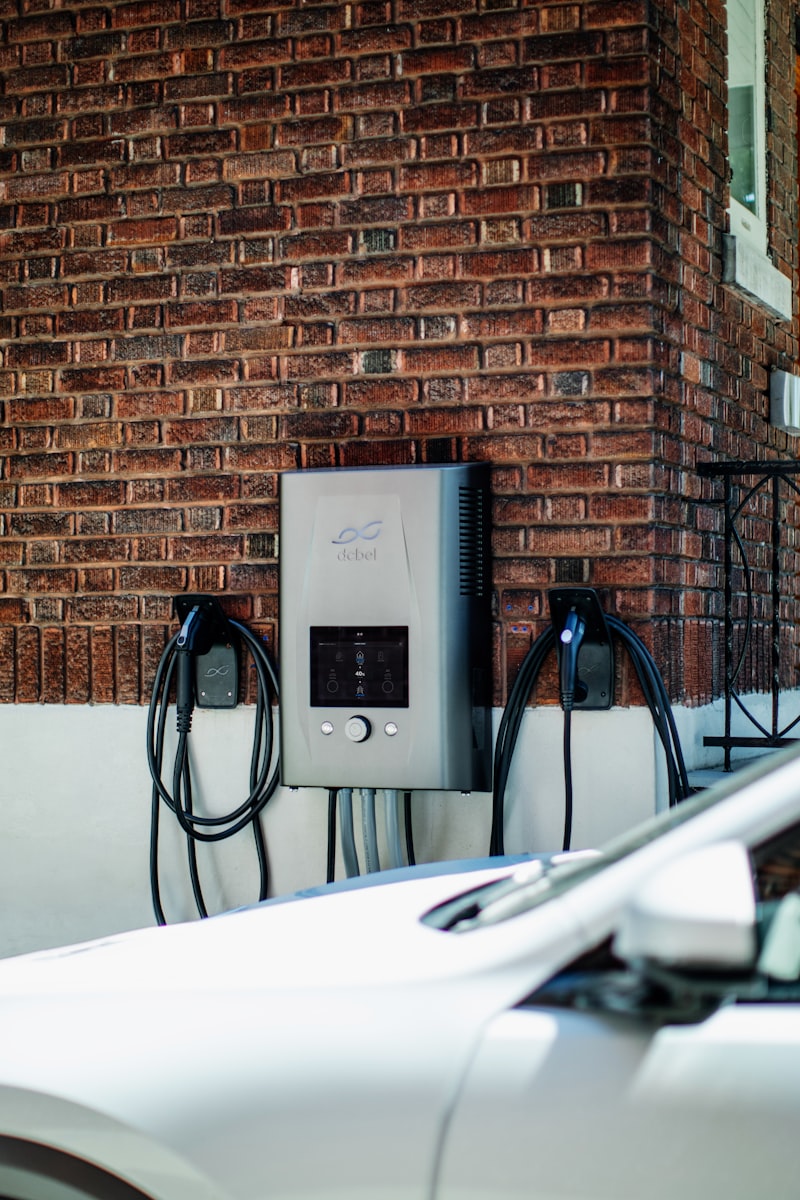
CATL overcame four manufacturing barriers that had previously stymied sodium-ion scale-up: controlling residual moisture during cell assembly, managing gas generation inside hard-carbon anodes, achieving reliable adhesion to aluminum foil current collectors, and developing self-forming anode systems that do not require pre-lithiation. Each of these was, independently, a years-long research challenge. Solving all four simultaneously cleared the path to mass production.
The cost advantages are stark. Sodium-ion cells are now hitting $55–70 per kilowatt-hour — a 35–40% discount to lithium iron phosphate (LFP), itself considered the budget segment of the lithium battery market. The raw material economics are simple: sodium is the sixth most abundant element in Earth’s crust and is commercially extracted from seawater and salt flats at negligible cost. It has no geopolitically sensitive supply chain. There are no cobalt mines, no Chilean lithium salars, no contested mineral concessions.
There is also an unexpected cold-weather advantage. Sodium-ion cells maintain higher charge acceptance at low temperatures than their lithium counterparts — a meaningful benefit for EV drivers in Nordic climates and high-altitude markets where lithium battery performance has historically degraded during winter months. For fleet operators in Canada, Scandinavia, or mountainous China, that reliability dividend alone may justify the switch, even before the cost argument is made.
Sources
- ScienceDaily — New sodium-ion battery stores twice the energy and desalinates seawater
- Born To Engineer — Sodium-Ion Battery Breakthrough: Water Retention Doubles Capacity While Enabling Seawater Desalination
- Electrek — CATL is launching sodium-ion batteries in EVs in 2026, aiming for 370+ miles range
- MIT Technology Review — Sodium-ion batteries: 10 Breakthrough Technologies 2026
- Bloomberg — Lithium Rival Sodium Is Making a Battery Breakthrough For EVs, Energy Storage
- MIT Technology Review — Why 2026 Is the Year for Sodium-Ion Batteries
- Get link
- X
- Other Apps


.webp)
Comments
Post a Comment