The Battery That Charges in a Quadrillionth of a Second
- Get link
- X
- Other Apps
The Battery That Charges in a Quadrillionth of a Second
⚡ A Breakthrough That Defies Everything We Know About Batteries
Imagine plugging in your smartphone and having it go from zero to full charge before a single frame of video could even begin to render — in a timeframe so short it makes a camera flash seem like an eternity. That is, in essence, what scientists at CSIRO, the University of Melbourne, and RMIT University demonstrated in March 2026, when they published findings on the world's first working quantum battery prototype. The device charges in approximately 34 femtoseconds: one femtosecond is one quadrillionth of a second, a unit of time so small it strains comprehension.
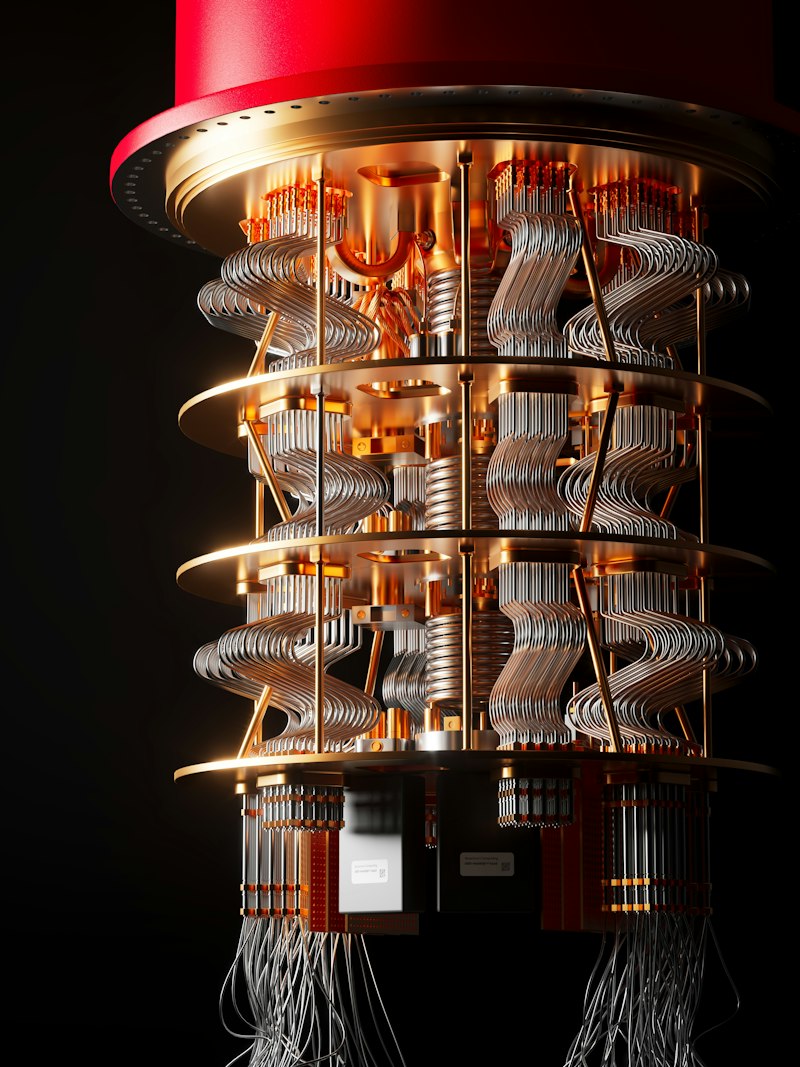
The device itself is not a battery in any sense you would recognize from a consumer electronics shelf. It is a multilayer organic microcavity — a precisely engineered stack of polymer films and mirrors designed to trap light waves inside a nanoscale chamber. When struck by a femtosecond laser pulse, the molecules inside do not absorb photons one at a time the way a solar cell or a conventional photoelectric system would. Instead, they all absorb collectively, in a single synchronized quantum event that the researchers call superabsorption. The difference is profound: it is the distinction between a crowd of people each silently reading the same page versus an entire auditorium reading it aloud in perfect unison, finishing in a fraction of the time.
What makes the discharge properties equally remarkable is the ratio between storage and charge time. The prototype retained stored energy for six orders of magnitude longer than its charging duration. If that ratio held as the device scaled upward — a critical open question — a quantum battery the size of a phone battery, charged in one minute, would theoretically hold its charge for approximately two years. The research was published in the peer-reviewed journal Light: Science & Applications in March 2026.
🔬 The Counter-Intuitive Secret: It Gets Faster as It Grows
Every battery engineer knows that charging speed and battery size are in a perpetual war with each other. Make a battery bigger to store more energy, and it takes longer to fill. This is not merely an engineering inconvenience — it is a deep physical constraint baked into how classical electromagnetic systems behave. The quantum battery, as demonstrated by the Australian team, simply ignores this rule entirely.

In a quantum battery, the charging speed scales with the number of molecules participating in the superabsorption event. Add more molecules — make the battery larger — and they coordinate more powerfully, absorbing energy even faster in aggregate. This property, known in theoretical physics as a quantum advantage in charging power, was first proposed mathematically in 2012 and demonstrated experimentally for the first time only with this 2026 prototype. The team's organic microcavity created what physicists describe as a "polariton" state — a hybrid between light and matter — inside the cavity, and it was this exotic state that enabled the collective molecular behavior.
"The molecules inside are all coupled together and behave as one. When the laser arrives, they all absorb simultaneously — that's superabsorption, and it's fundamentally a quantum effect." — CSIRO Research Team, Light: Science & Applications, 2026
The implications extend well beyond charging speed. Because the superabsorption phenomenon is a quantum coherence effect, it only works when the molecular system is maintained in a carefully controlled quantum state. This is why the prototype currently operates at extremely small scales and with highly controlled laser inputs. Translating this mechanism into a room-temperature, large-scale, consumer-facing product remains the central engineering challenge — but one that researchers now believe is tractable, precisely because the underlying physics has been confirmed to work in practice, not merely in theory.
🌐 From Femtoseconds to the Future: What This Changes
The practical applications of a truly functional quantum battery — one that charges in seconds rather than minutes, and holds its charge for months or years — would cascade through virtually every corner of modern technology. Electric vehicles, whose primary adoption barrier remains the combination of limited range and slow charging, would see their most fundamental constraint dissolved. Grid-scale energy storage, the missing link between intermittent renewable generation and reliable power delivery, could become far more economically viable. Implantable medical devices, aerospace systems, and consumer electronics would all be transformed.

But it would be intellectually dishonest to present the quantum battery as an imminent arrival on consumer shelves. The 2026 prototype represents a proof of concept — a demonstration that the physics is real, not a product roadmap. Significant engineering work remains: maintaining quantum coherence at room temperature and at larger scales, engineering laser systems or alternative energy-input methods that are practical outside a laboratory, and managing the heat and decoherence that plague quantum systems at macroscopic sizes. The researchers themselves are careful to describe this as a "first step," albeit a momentous one. Quantum batteries join a growing roster of 2026's most consequential emerging technologies — alongside sodium-ion batteries, bespoke gene-editing therapies, and new classes of quantum materials — in representing not science fiction, but science still en route to engineering.
What makes this particular discovery worth dwelling on is how thoroughly it unsettles our intuitions about scale and speed. In almost every domain of physics and engineering, bigger means slower. Quantum mechanics, which operates by entirely different rules, offers the astonishing promise that some systems become not just equally fast, but genuinely faster, as they grow. That possibility — embedded in a small stack of polymer films in an Australian laboratory — is one of the most quietly revolutionary ideas of the decade.
Sources
- Live Science — Quantum battery charges in a quadrillionth of a second with a laser
- ScienceDaily — World's first quantum battery could enable ultra fast charging
- SciTechDaily — Scientists Just Built a Quantum Battery That Charges Almost Instantly
- Futura Sciences — The world's first quantum battery could charge faster than ever and transform energy
- MIT Technology Review — 10 Breakthrough Technologies 2026
- Get link
- X
- Other Apps


Comments
Post a Comment