AI Superpowers Collide: Google's I/O Wave, Apple's Pivot, OpenAI's Ads & Meta's Great Reset
- Get link
- X
- Other Apps
AI Superpowers Collide: Google's I/O Wave, Apple's Pivot, OpenAI's Ads & Meta's Great Reset
🌐 Google I/O 2026: Gemini Takes Over Everything
Google's annual developer showcase returned with perhaps its most consequential product lineup in years. At I/O 2026, the company unveiled Gemini 3.5 Flash and Gemini Omni — the latter capable of generating or editing virtually any media type from any input — alongside a sweeping expansion of AI features across every major Google product surface. Search, YouTube, Gmail, Google Docs, and even Google Shopping received Gemini integrations, marking a decisive shift toward AI-first product design across the entire Google ecosystem.
The most talked-about announcement was Gemini Spark, a 24/7 personal AI agent that runs on Google Cloud virtual machines even when a user's device is offline or powered down. Spark can work autonomously across Google Workspace, third-party applications, and the open web — a direct escalation in the race toward agentic AI. On the hardware side, Google revealed Android XR glasses, its most serious bid yet to bring augmented reality into everyday consumer life. The company also introduced a new Neural Expressive design language and dropped its Google AI Ultra subscription price from $250 to $100 per month.
Behind the scenes, Google and Blackstone announced a joint venture to fund AI data infrastructure, with Blackstone committing an initial $5 billion in equity targeting 500 megawatts of new capacity online by 2027. The message from Mountain View was unambiguous: AI is not a feature — it is the foundation.
🍎 Apple Throws Open the AI Gates with iOS 27
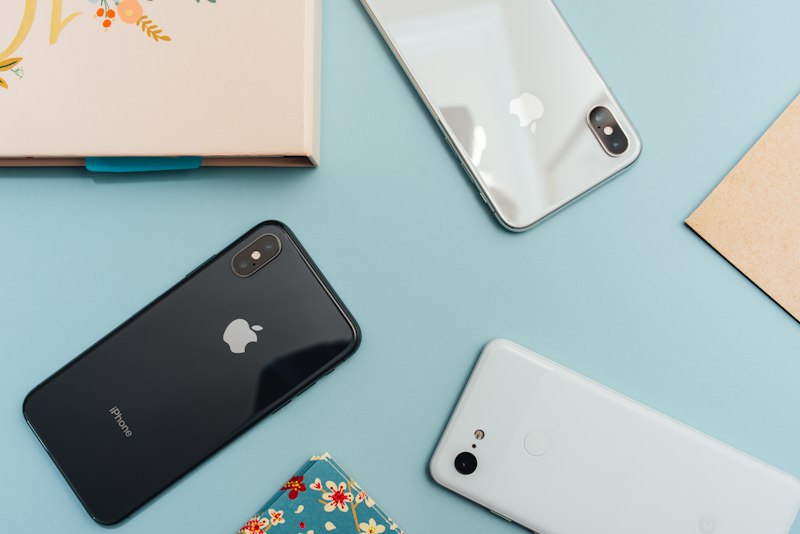
In a landmark departure from its traditionally closed software philosophy, Apple is preparing to allow users to select third-party AI providers — including Google Gemini and Anthropic's Claude — as the default engine powering Apple Intelligence features in iOS 27, iPadOS 27, and macOS 27. The move, set to arrive ahead of WWDC this summer, signals Apple's recognition that no single AI model can lead across every category, and that user choice may become a key competitive differentiator in the platform wars.
The changes go further than a simple toggle. iOS 27 will reportedly let users choose AI voices for Siri from third-party providers, making it transparent when Siri is routing a query to Gemini or Claude rather than Apple's own models. Apple has also signed a formal multi-year deal with Google under which future Apple Foundation Models will be built on Gemini technology and Google Cloud infrastructure — an extraordinary arrangement between two of technology's most historically adversarial rivals.
“iOS 27 will let you pick Claude or Gemini instead of ChatGPT for Apple Intelligence.” — MacRumors, May 2026
With Apple's WWDC expected in June, all eyes are now on whether the company will frame this AI openness as a feature — or as a quiet acknowledgment that its own models still have ground to cover against Google and OpenAI's frontier offerings.
💰 OpenAI Reports $5.7B Quarter — and Wants Your Ad Dollars

OpenAI disclosed approximately $5.7 billion in first-quarter 2026 revenue, outpacing rival Anthropic and underscoring the accelerating commercial appetite for AI services among enterprises and individual users alike. The figure was driven by record business subscriptions, strong uptake of its Codex coding agent, and early revenue from ChatGPT's advertising experiments — a line of business that OpenAI is now pursuing aggressively.
The company has launched a self-serve Ads Manager platform that allows advertisers to create, manage, and optimize campaigns directly inside ChatGPT. OpenAI is targeting $2.5 billion in advertising revenue this year alone, and has set an audacious long-term goal of $100 billion in annual ad revenue by 2030 — a figure that would put it in the same tier as Google and Meta's current advertising operations. The move raises significant questions about how sponsored results will be labeled and distinguished from organic AI answers inside ChatGPT's interface.
⚡ Meta Cuts 8,000 Jobs in Its Biggest AI Bet Yet
Meta has initiated the first wave of its planned 10% global workforce reduction, cutting approximately 8,000 roles as part of a sweeping efficiency drive tightly linked to the company's massive AI investment cycle. The cuts follow an earlier round in which roughly 7,000 employees were reassigned to newly formed AI-focused business units — signaling that Meta is not simply downsizing, but actively reshaping its organizational structure around AI as the central strategic priority.
Reports indicate that Zuckerberg had employees working on AI training pipelines before the layoff announcements were made — a sequence that drew sharp criticism from labor advocates and industry observers. The broader context is a tech industry facing intense pressure to demonstrate that AI spending translates into sustainable revenue: Meta has committed tens of billions of dollars to AI infrastructure and model development, and investors are closely watching whether those outlays will yield the productivity and revenue gains promised in executive communications.
“Zuckerberg used employees to train AI before firing 8,000.” — Tech Startups, May 2026
The Meta restructuring underscores a broader industry pattern: as generative AI tools automate more knowledge-work tasks, the companies building those tools are among the first to restructure their own workforces around the new capabilities. It remains an open question how this dynamic will ripple across industries beyond Silicon Valley.
Sources
- MacRumors — Google I/O 2026 Roundup: Gemini 3.5, AI Search, Android XR Glasses, and More
- MacRumors — iOS 27 Will Let You Pick Claude or Gemini Instead of ChatGPT for Apple Intelligence
- Build Fast With AI — AI News Today, May 23, 2026: 12 Biggest Stories
- Tech Startups — Top Tech News Today, May 22, 2026
- Medium — AI NEWS: Week of May 18 to May 24, 2026
- Get link
- X
- Other Apps


Comments
Post a Comment